I feel like the prices on electric vehicles are starting to become their biggest hurdle (instead of range, availability, or charging which are solved enough).
If you're from California or New York, I'm sure $40K starting for this or a Model Y seems complexly within your means, but there's a large chunk of the US (by population AND land) where <$20K new sedans remain popular and "nicer" vehicles are still in the $20-$30K range (and we're talking about SUVs and other family sized vehicles rather than small sedans).
People love to spam $40K US "average" while entirely ignoring that the average is a highly abusive figure containing $80K+ trucks and luxury vehicles, as well as a few $15-32K vehicles dragging that figure down. It doesn't really reflect anything useful.
Go look at this map[0]. How many of "the most popular car by state" are $40K? Zero. But yet an electric is going to replace a $21K Honda Civic by 2025? Really?
And I'm not dumping on the manufacturers here: From what I understand batteries remain the lion's share of an electric vehicle's total production cost (I've heard as much as $16K/vehicle). So this isn't profiteering, this is the tech not yet being ready price-wise for the mass adoption everyone seems to believe will come soon. Worse still as electric vehicles become more popular the rare earth metals that seemingly remain popular within the batteries may increase in cost offsetting our future reductions.
To be clear: I want to own an electric vehicle. I'd trade my current Subaru Outback ($27K) in tomorrow if I could buy a comparable electric. But those start in the $40K range (and honestly the cheapest trim is just a hero model, they don't intend to sell many, and blackmail buyers with missing basic features accordingly).
But frankly, it's a light truck. It's contractor's vehicle, or farmer's, but it's hardly a commuter car. It may be reasonable for countryside, like a boat may be reasonable for seaside.
Nevertheless, just googled it:
---
People also ask:
How much does a 2020 F-150 cost?
From $28,745
2020 Ford F-150 / MSRP
---
I live in urban Texas. At a glance, my truck has perfect paint. You can't see the 3rd party liner I put in and the gouges in the truck bed. Most of the time you aren't going to see all the gear or trailers I haul for different organizations. Sure, some people buy trucks to compensate for something, but some of us who have an entry level Ford F150 or Ram 1500 do in fact use them as trucks when you can't see it.
Most of the new F150s and other full sized trucks sold now are four door models. They are entirely grocery getter commuter vehicles with their stubby 5 foot beds. It is now rather difficult to get pickups with smaller cabs.
It's a very light truck. Especially these days. Seems like a vanity vehicle mostly. If you're hauling you have a bigger truck, and if you're offroading you have a jeep or something.
Nobody is using electric for anything that we'd relate to as "critical" or "high availability". In fact, there are trucks that just bring gasoline to bigger trucks.
The difference in what’s called “light” in the US and Europe is huge. The F-150 is, to me (a European), a very substantial vehicle. Its front end is the height of a medium-sized family car!
In Israel there are no F-150s, but their larger siblings like the F-350 and the Silverado are very popular (admittedly with contractors, you don't see white collar people buying them). Reason is, they are classified as proper trucks for tax calculation, so you get all kind of write offs and don't pay VAT (17%) on them.
The same people used to drive the smaller Japanese pickups (like Toyota Hilux) before, it just stopped making sense buying these when F-350 costs less due to the tax reasons above.
So it's funny like that when among the regular hatchback and compact car mix you see in any European country you encounter more F-350 monsters than you see in the USA (relatively speaking).
Yeah almost nobody drives those here. They would take every single time 2 parking spaces and stick out big time, and as mentioned in this thread its mostly a vanity car. Most of the underground parking wouldn't be accessible with it. Contractors/small companies have vans which are much more useful for actual work (ie load capacity, permanently covered) and cost less to buy and run. Which are the most important criteria to run a business successfully.
For personal driving, either fugly SUVs or wagon types offer much better... well everything. Operating costs, much better driving experience, you can actually park it everywhere.
Personally, I drive an F-150 because I visit Home Depot quite a lot for home projects, take the kayaks down to the lake, and because just generally being able to haul things when I need to is enormously useful. It just seems to happen a lot in normal suburban life.
That said, I will definitely be trading up to a Cybertruck as soon as it’s available.
Anyone who's driven on a highway in Texas knows this is likely untrue, at least for most F150 owners. I see a shocking number of pristine, washed and waxed F150s every single day when I'm driving. Those and Ram 1500s dominate the roads here.
I live in DFW also and you are correct. I'd take a guess that 80% of F150 owners live in a quiet suburban neighborhood and have never used the truck bed. What really is insane is the folks like a neighbor down the street who has an F250 Diesel Monster truck that has never seen any off road action except the time he drove on his grass backing out of the driveway. Same with all the Jeeps with oversized tires and 12k in tricked out off road gear, driven by soccer moms. I suppose it's some kind of status symbol like all the old farts buying Harley's and pretending they are some kind of bikers...shame they destroyed the brand.
You are correct. This very entertaining 11 minute video from Fortnine (still one of the best channels on YouTube) does a great job explaining exactly how HD wound up where they are today: https://youtu.be/EOwxxsPaogY
Sounds kind of like Leica to me: orthodontists running around Africa or Asia pretending to be Steve McCurry with $11,000 'Safari' cameras destroyed the brand for me. Yeah, sure, the company is still technically alive, but at what cost?
Are the cameras not good anymore? Or is it that the “wrong people“ are using their products that bothers you? If it is the latter, then you are just trying to buy an identity through brands, and you are as much part of the problem.
Leica glass is great. Leica cameras are great. I wish the company would focus on turning out high quality products that are meant to be used to create photographs, as opposed to turning out the camera equivalent of a Birkin bag.
And I say this as someone who has previously owned and shot with a Leica M6 and currently owns and shoots with a Leica IIIf.
The only good thing about Leica cameras is the handling, arguably and subjectively. They are behind in every single other respect. Leica lenses are good, though.
Couple being sub-par with being much more expensive and you get something that is moreso useful for image than as a tool.
The only upside with the rediculious "Live to Ride", or whatever rediculious marketing slogans they use is most used Harley's are bringing 1/2 of what they were in the nineties.
>Actually, they kept the brand alive by buying the product.
>Without those people they'd have died long ago.
I disagree, the Company was founded in 1903 and was did well into the 90's and then the 50 plus crowd decided to be some kind of poser biker gang type and destroyed the brand. Not very different than what happened to the Corvette and all the 6o plus folks buying them the last 20 years.
Wrong, the brand hung on and is dying out with boomers.
Everyone knows that the younger kids get crotch rockets.
It wasn’t the hold people that ruined the brand, it was the brand marketing to Boomers for shortsighted gains.
Harleys are for Boomers. Harley made sure that was the message.
Now they pay for it.
Harley's were synonymous with Motorcycle Gangs (Ex: Hells Angels, etc) or with young cool men (18+).
All of a sudden in the 90's a lot of these 40-60 year olds started to try and recapture their youth or that coolness they never had. They started buying Harley's and dressing in Leather and making these ridiculous club patches and driving around revving their motorcycles everywhere. It was so cringe that you actually felt ashamed for them.
Here is a good clip from South Park that kind of sums it all up.
I agree with you, but the problem is, there is no suitable replacement. When someone says, "soccer mom", you know exactly what they mean. And there is no phrase like it.
Just like the phrase "Indian giver". That one is just straight up racist and I will never use it, but sadly I haven't found a substitute for it either. "Someone who gives a gift and then takes it back" just doesn't roll off the tongue...
Isn't that insanely inconvenient? It takes so much more space, needs so much more fuel, is so much more bulky to drive .. is that bit of "status" actually worth it?
Besides, even if you haul sth bigger 2x a year, renting a little trailer of the right size is really a no-brainer. That's what I do.
> Isn't that insanely inconvenient? It takes so much more space, needs so much more fuel, is so much more bulky to drive .. is that bit of "status" actually worth it?
I'm wondering the same thing, especially since I see more and more of those trucks in Paris, France. Now I've never been to the US, but one thing with European cities is that there are a lot of old, small streets. We also never really had big cars like in the US, so parking spots, etc, are tiny for those cars. Hell, I have an older C-class coupé and it barely fits in street parking spots.
We also have our share of off-road vehicles that have probably never left Paris, seeing how they have huge rims with low tires. But I guess since the streets are in a horrible shape and getting worse, an off-road vehicle may make some sense.
However, I guess that's the whole point of "status". Something that's practical and affordable (financially or otherwise) for everyone can't confer status.
So when it comes to status-seeking, those metrics being outrageous is actually a feature, not a bug.
>especially since I see more and more of those trucks in Paris, France
Yep, this trend exploded almost everywhere in Europe and I think I found the answer to why. Lots of my male colleagues at work (devs in Europe) are married and have kids on the way and when discussions came at lunchtime about buying a new family car for taking the kids places it seemed like the choice is always a SUV. Whenever I ask them why a SUV, even though they usually prefer sleek sedans, the answer is always "my wife/girlfriend says she feels safer in a big, tall car", which mostly makes sense as throughout history, females' reproductive and nesting choices have had a major impact on shaping male behavior and various aspects of society like real-estate and now car choices.
It's sad that this kickstarted what is basically an arms race on the road since nobody feels safe anymore driving their kids in the traditional European compact car when everyone else is now in big heavy SUVs with poor visibility and easily distracted by their phones or infotainment touch-screens so this fear drives them to one-up their "competition" with bigger and heavier cars to make sure their kids have a perceived higher safety in case on an accident.
Another thing is today's compact cars are getting ridiculously low. I don't want SUV, but I want to drive on crappy gravel roads with confidence and park close to curb without scratching bottom of the bumper. Regular cars used to allow that 2 decades ago. Now I'll need a „raised“ car for that :(
That's for fuel efficiency reasons. Cars lower to the ground get much better mileage at highway speeds since they have less aerodynamic drag.
And it's not just compact cars, modern SUVs, except the ones destined for workhorse off-roading, are also lower to the ground than they were 20 or so years ago since they never leave the city/highway anyway.
Large utility vehicles like pickups are, by dint of their mass, their high centres, and their poorer visibility, dangerous to other people on the road.
They also release a large amount of carbon into the air.
So yes, their use as a recreational or status symbol should be discouraged.
I have an older Ford Ranger. It is only 300 lbs heavier than the heaviest Prius models. Put a pair of super sized Americans in there and their gross weight is more than my dangerously heavy vehicle.
My point is the discussion should be entirely about carbon footprint, not whether CO2 emitting processes or machines (in this case large vehicles) are truly "needed".
Surprise! People buy cars that are not functional but aspirational. Can we add:
- SUVs that are are really just wagons or hatchback with big tires.
- Sports cars that will never see a track and couldn't possibly be driven safely at half their top speed.
- Trucks with reinforced bumpers, headlamps and gas cans so that they are ready for Baja or more likely Target.
- Your BMW or Mercedes that convinces me you are really rich because you can afford a lease or a 72 month loan.
This is human nature. Wanting more than you need is actually important to capitalism in countries as rich as the U.S. so I cut people a break.
I give SUV drivers a bit of merit. Many (most?) come with a third row or at least the option for one so they are the most practical way to carry around up to 8 people at once safely.
As a former child, I can attest to this fact as I have ridden (rode?) in the back of an SUV many times. This is a great value-add as most children cannot drive themselves.
F150 was the minimum truck when I worked in landfill construction in the Northeast and NY. They’re decent on the site dirt roads. But they ride hard and I found the handling on the road pretty bad.
They’re not popular here. Except for those that need them.
(Maybe RWD and light tail and snow.. ). SUVs are it here.
I was surprised how much of the rest of the rural US uses trucks as a day to day vehicle.
This is why it’s political. Gas is cheap in the us, credit is easy and to some extent, there’s a cultural aspect (at least here in Texas). Generalizing people like big cars here. Ironically enough my 4 door VW Passat had more backspeat space for my 2 kids which was my primary motivation. So it’s not about hauling kids around — at least for most. it’s about the size in general, the lack of disincentive, the occasional usefulness of a truck bed, perception that it’s safer (when you get hit by another truck, you probably don’t want to be in a small car like mine). combine with general ignorance of the climate issue and there’s little reason to not get one. Hence why so many do. I’ve heard quite a few people describe small and electric cars as hmmm various forms of “non masculine”. So all together... it’s a LONG way to go to improve the situation sadly.
Yeah pickups and SUVs tend to cost more (and have much higher profit margins) than sedans and they're everywhere outside of NYC/LA. I would not be surprised to find out pickups and SVUs out number sedans in those areas.
According to AutoWeek, who I expect knows of what it speaks,
"The most popular model [of the Ford F-150] is the SuperCrew XLT with the 302A package...That pickup, upgraded to 4X4 and the 6.5 foot bed, comes out to $50,020."
It’s their primary money maker so it’s priced and advertised to maximize revenue. There’s a reason so many electric cars have ugly designs and it’s not because they don’t know how to make a good looking vehicle.
Trucks can be used for towing or hauling large and heavy goods. I am yet to see an electric vehicle do the same and retain any notion of a practical range.
> From what I understand batteries remain the lion's share of an electric vehicle's total production cost (I've heard as much as $16K/vehicle).
I've seen this same figure for current EVs. But it's important to look at the trend. Lithium-ion battery prices have decreased by 97% since their introduction in 1991. The price decrease curve is amazing [0]. Teslas were at least $80K in 2015; today a Tesla with similar range (Model 3) can be had for $40K. That decrease is largely the result of Tesla and Panasonic improving battery energy density and battery production economies of scale. There is every reason to believe this trend will continue, especially if solid-state batteries can be scaled up.
As for rare-earth metals, cobalt is the worst one w.r.t. rarity and human labor. Tesla's next generation of batteries (starting in late 2021) eliminate cobalt and substitute nickel and manganese, which are far more plentiful and don't require child labor.
Not trying to sanctify Tesla here; I just follow them more closely than other battery manufacturers. The others are probably working toward similar goals.
Cobalt is not considered a rare-earth metal. It's actually relatively common. Lithium-ion battery cells do not typically contain any rare earths, but permanent magnet motors in EVs do.
range, availability, or charging which are solved enough
But are they really? Especially for charging, I'm still not convinced.
The articles makes a case that you can go and grab a coffee while your ID.4 charges in 30 minutes at a high-speed charging stations. Sorry, but "30 minutes" and "high-speed" in one sentence seems somewhat misplaced. Who can afford to just waste 30 minutes for charging on a regular basis?
I currently live in a suburb in central Europe. I just checked on https://chargemap.com/ for my area - I don't know how up-to-date their map is but there are only a few charging stations within 20 minutes from my house, none of which is a high-speed charging station.
And unlike houses in North America, almost none of the houses on my street has a drive way, i.e., me and most of my neighbors park on the road, sometimes a few houses down from mine - so, no chance for charging a car over night at home. Of course, before I moved to the burbs, I sometimes had to park a few streets away at night because apartment buildings here typically don't offer parking garages (they exist, but it's not common).
Unlike some people with strong opinions, I'm actually in favor of electric cars. However, the practicability is just not there for the way a lot of everyday life is currently organized in many parts of the world.
> Who can afford to just waste 30 minutes for charging on a regular basis?
The idea is that charging is done at home overnight, so that the high speed charging stations are only used whenever one is doing longer drives on a single day.
As you point out though, not everyone has access to charging at home. Some employers do have charging stations, which can help since many cars do stay several hours at the office every day.
Total off topic, as comments on older posts are off.
As per your comment from 19 days ago [0], is it possible for you to write down something about your air quality sensors project? That would be awesome.
As someone with an electric car, it's really not a big deal for me. I can do all my (admittedly short) commutes and go to the gym and barely use 5-10 percent of the battery, so can charge once a week or at night.
I live in Europe, with no possibility of home charging. My closest charger is 20 minutes away. My wife charges when she goes to work, rarely these days. Otherwise, we combine a shopping trip and charging, or a walk and charging. The first 50-80% of the charge goes fast, so you can easily pick up 100 km of range in the time it takes to go to the garden center.
If you want an electric car, get it. Charging is not the problem with them: affordability, availability, and matching the range to your lifestyle are.
Apart from at night the other long period a car is not used is when people are at work. I hope governments give tax incentives for companies to install chargers in their parking lots as this is also the time where solar power is abundant so the electricity used for transport would be cleaner compared to night charging in most cities and countries.
Most big garages, unless built recently, probably don't have the power required to make a substantial amount of spots with chargers, and parking garages are generally so optimized it's hard to run more.
I know that at my work, which is in a fairly modern office building meeting all the latest hotness in LEED and whatever, there are basically just a handful of spots with electric and there is so much demand for those spots that you're not allowed to park there for more than two hours at a time.
---
Parking has the double whammy of being entirely an expense, and possibly being outmoded. If you buy the electric autonomous fantasy of people no longer owning cars and relying on Uber-like shared fleets, that basically makes the vast majority of parking spaces obsolete, and so developers understandably are trying to make their parking lots easy to tear down and redevelop. (You can't really reuse the sloped floor plates of a parking garage for much else since all other building uses tend to need flat ground, and in any case the runoff from parked vehicles is quite nasty stuff.
Similar situation here in Western Europe. I don't even have direct road access, need to take some stairs. So when I was buying a car electric made no sense.
However lately the city has made some improvement to public charging stations at the train station, a couple streets even have charging spots. And businesses like IKEA are starting to have charging ports.
Still too impractical for me, but I can see it being more feasible now than even a few months ago.
I have a drive way, and it’s not solved for me. My driving needs would require me to be frequently filling up at charging stations.
These kind of “it’s solved” statements are very much picking the facts to fit the conclusion, rather than the other way around. Pointing this out usually elicits a “well you should change your lifestyle to better suit the features of an electric car”. If you tried to say that about software features most of us would intuitively know how dumb it is, but it’s supposedly a much more reasonable argument when made about transport.
It’s more than just “transport,” it’s the environment.
At one point, gas stations were hard to find and the horse/buggy reigned supreme. Gas cars were actually much cleaner then than the alternative. I’m glad we made that transition and I look forward to this new transition which will undoubtedly require at least a little change from just about everyone.
The importance of other factors don’t make UX obstacles magically disappear. If that’s the point a person is trying to make, then that’s what they should say. Not “UX is solved now”.
> My driving needs would require me to be frequently filling up at charging stations.
I don't think $40k electric cars (or even the long-range Tesla models) are for people who use cars for work and require frequent/long distances.
This is more for the guy who does 15-30km/day commute, then maybe few km to the mall and has a driveway in his house. Maybe once in a while does 100km trip to some mountain.
There is loss, around 10%. One way to reduce it is to pre-heat the car while charging. Heat pumps in EVs are efficient/fast, and less annoying than waiting forever for a gas car to defrost.
There is also the additional friction from winter tires, and in summer drag from a bike rack. A bit similar to gas consumption, but does require planning stops on long trips.
Not at all, there are a lot of people commuting 100+ miles per day in EV’s here in CA. A lot of people have mega-commutes because housing is so expensive. An EV gives you access to HOV lanes, which can cut commute times in half. And, you can charge at home while you sleep and never again waste even a minute at a gas pump.
Yea, I had a ID.4 pre-ordered but canceled it after I realized how absurd the price is. I bought a utility e-bike instead and that was probably one of the best decisions I’ve ever made. I barely use my car anymore and biking is way more fun and greener than any car.
I was thinking about an ID.Buzz until I took my Golf to a dealer for a 20K service. Then they tried to sell me tires for 4 x the price of Discount Tire - the tires on the car are absolutely fine - almost 1/4". Then they decided not to rotate my tires due to "tire condition" - to spite me? - and nickel and dimed me on a pair of wipers.
I don't want to renew my relationship with a dealer. Especially not with an electric car where I really would be beholden to them until the independent shops catch up - if they ever do.
Yeah, but electric cars have so many fewer moving parts that they just don’t need much maintenance at all. As someone who has an EV now, I’m never going back because EVs are just so much better overall.
This isn't really true in my experience. I have an Outlander PHEV and the costs associated with maintaining the electrical system have dwarved the ICE maintenance costs. The other major expense has been tires, which electric cars also have.
It doesn't matter matter if there are only 50% as many parts to service if servicing those parts costs three times as much.
At the end of the day, this is all revealed via depreciation.
Cars experiencing a lot of depreciation, by definition, are viewed by the market as more expensive to service over their usable life, as depreciation is just the forward payment of future maintenance costs:
Say a car will last for two periods. In the first period, the repair costs are zero, and in the second they are 15K. Now the car costs 35K new. Total ownership costs for both periods are thus 35+15 = 50K for 2 periods. Split evenly, that's 25K per period. But the buyer in period 2 will pay 15K in repair costs and 10K for the car. The buyer in period 1 will pay 25K in depreciation. Both parties pay 25K. If they didn't, and one party was paying more than the other, the put-upon party would prefer to buy new and resell instead, or buy used, etc, so in equilibrium, both parties pay for half the purchase price plus half the lifetime repair costs, except the new car buyer "pays" for their half of repair costs via depreciation whereas the used car buyer pays out of pocket.
Now you have a situation where Tesla Model 3s are depreciating at rates comparable to the dreaded BMWs -- notoriously expensive to maintain cars. E.g. they are losing 44% of their value after 5 years of ownership (source: https://caredge.com/tesla/model-3/depreciation)
So it doesn't particularly matter that there are fewer moving parts, etc, as for some reason the market believes these cars are going to be about as expensive to maintain as BMWs, which have lots of moving parts (and lots of plastic parts).
Now if we know that, we can come to a few conclusions:
* the market is just wrong and out-of-warranty Teslas will be cheap to maintain, in which case there is an arbitrage opportunity to sell Tesla warranties and make lots of arbitrage profits. Feel like getting into that business? Me, neither.
* The theory is wrong and the fact that there is a simpler drivetrain doesn't have much to do with overall maintenance costs due to all the other stuff modern cars do that don't have to do with moving down the road. Uhh, maybe.
* The theory is right and the electric car makers are just screwing the pooch by managing to sell expensive to maintain cars even though there are fewer moving parts. I tend to favor this theory.
But in either case, arguing that because there are moving parts, the cars must be cheaper to maintain is a fallacy. It's a confusion of theory and practice in one of the many situations where out of warranty car owners are screaming in pain at their repair costs, and countering "muh moving parts" is missing the point.
The price is high compared with ICE but for what you get as an EV it is well priced. Significantly cheaper than model Y [1] now that model Y standard range has been discontinued, especially as VW still gets the $7500 fed subsidy. You are looking at $14k more for the Tesla. You will get much more acceleration, all wheel drive and 70 miles range for that $14k if you want to spend it.
The model 3 is cheaper but not the same class of vehicle.
$40K ($32K after tax incentives) doesn't seem absurdly expensive. Most cars in that size class seem to be in the $30K range.
What's surprising to me is that you were seriously considering a mid-size SUV, but settled on an e-bike. (My main commute vehicle (when I was commuting) was a bike, but that bike is in no way comparable to an SUV)
I'll never understand this. You presumably are biking on the street, at best in a bike lane, at worst in the shoulder, and are placing so much confidence in other people to not hit you.
Given how SHIT other people are at driving, I have no desire whatsoever to be on a bicycle in front of them.
Cars are 1-2 ton machines that can kill you as a cyclist or pedestrian, and humans are awful at operating them. The solution is therefore apparently to put more of those machines on the road (for self-protection) instead of reducing the risk altogether?
Yea, it's a conundrum. I personally would love nothing more than to cycle to work, but it's not worth the risk of serious injury or death. The only solution I can see is at a city level legislating bicycle only roads which are totally void of vehicles.
I'm a cyclist, and use my bike to get around town, though I also own a car. Of course I can't completely dismiss your sentiment.
Possibly my most important safety measure is route choice. The streets that I ride on have very little car traffic. This includes separated bike paths, but also quiet neighborhood streets. Fortunately this is possible in the town where I live. In decades of riding, I've never experienced a collision with a car, and my near-misses have been rare.
This 100%. When I bike to work I take a route that is 2 miles longer than when I drive. Just to avoid a few left turns and a few busy roads witch sketchy bike lanes. Now that I have an e-bike the commute is actually really fun and I get to work with energy.
It's important that cities build great biking infrastructure to alleviate this problem.
At the same time, this is used by a lot of people as an excuse to not get a bike. In fact, it's not that dangerous as you make it out to be as is proven by statistics I guess (didn't look them up)
This is a bit misleading. With bikes, you usually only do a couple of km per day, whereas with your car you probably do 10x that.
If you look at the absolute number of deaths, biking is reasonably safe. As I said before, cities can do a lot to make it even safer, such as good bikelanes, better traffic lights for turns, better driver's education and so on.
Not really - most of this subthread is about people replacing their use of a car with a bike. In that case, you have to do the same number of km. They're probably not people who commute 50 km each way, but there aren't that many of those anyway.
I also disagree with looking at absolute numbers. Of course bikes look better there because compared to cars, very few people cycle in most places. Relative numbers are the only ones that make sense. Apart from this, I drive and cycle, and it seems obvious to me that cycling is considerably more dangerous. Everyone I know who cycles accepts that it's a case of when, not if, something goes wrong, and the consequences are obviously much worse on a bike.
The only way that changes if cities get better cycling infrastructure, and the only way they get better infrastructure is if they stand up and get counted on the road.
This is a bad statement. California isn't even bike friendly. The Netherlands or Denmark, or hell, Germany are all VASTLY more bike friendly than California.
Most of the heavily populated places in the bay area are fairly flat, so that's not really a problem. Plus, with ebikes these days, hills just aren't the barrier they used to be.
The problem is mostly just infrastructure. Almost no California cities have more than a piddling amount of safe transportation biking support.
These days have little to do with historically. The bay is hemmed in by hills and water. LA is similarly hemmed in, creating a nice bowl that traps pollution. Seattle and Portland are both hilly, you are not at a flat grade. Berlin, Amsterdam, Copenhagen are all flat in contrast.
Cities with lots of hills in Europe don’t have as many bikers or biking infrastructure. Eg Lausanne unless you want to go for a jaunt by the lake. Cannes was the similar during a short visit I made 20 years ago. Hilly south Europe (Athens, Rome) doesn’t seem to like bikes very much either.
Good thing we’re talking about ebikes with great torque that make short work of hills, right? LA is ten times less smoggy than when I was a kid, thanks to cleaner cars and no electric vehicles.
Wow that's pretty amazing. I'm a Californian in Boston and I managed to ride when it was about 0F out and I thought that was a bit much. How do you dress for such a venture? I find that either I'm freezing cold when starting off until I get warm through exertion, or I'm comfortable starting off and am sweltering by the time I get where I'm going.
It's a tricky balance, and usually you want to start a bit cold, knowing you'll get warm "Be bold, start cold" - but of course you have to watch out for frostbite.
My commute to work was only ~15mins on the bike, and for the first half I was a bit cold, and then the second half I was unzipping my jacket and would even stand outside the office with no jacket of toque or gloves for 3-5 minutes in -40 temps to cool off. The steam coming off me was always fun :)
With a longer ride (my landlord rode 40 mins each way) you stop after about 20 minutes and change layers - usually go for windproof with minimal insulation to prevent overheating/sweating.
i find that my hands, toes and ears seem to be weak points. i might have to find some earmuffs that work with a helmet for next winter.
side note: i snooped your profile a bit and i'm intrigued by the path you've chosen. i am moving in a similar direction, and no doubt could benefit from referencing your experience...
I used to wear a pear of very thin merino wool gloves and then a MASSIVE pair of very well insulated mitts. After leaving the house I had to take off my mitts to unlock my bike, and I knew it was cold (past -35 or so) when I couldn't feel my fingers after 20 seconds of no mitts.
On my feet I wore thick wool socks, and very well insulated winter boots. They were always hot, even just standing still past -40
For my face I had a toque under my helmet and a big thick merino wool neck warmer that I would pull up until it was right under my eyes - so it covered my ears entirely.
Half way to work I would pull down the neck warmer, unzip my big jacket, etc. in an attempt to not sweat too much.
.. haha, yeah, my path has been a different one, and I'm a thousand times happier than when I sat at a desk. I'm TheRoadChoseMe around the web, and my email is dan @ that .com if you want to get in touch!
I think you are being a bit overly negative but you do have a point. Where I live (northern Europe) I could never get by with any kind of "open" vehicle (i need a roof and heating) and snow tyres.
You can get snow tyres fitted on a bicycle (I had some as a youth) but bicycles are still quite horrible in the winter.
I remember biking home from school during the winter when it was snowing heavily. The sidewalks were completely snowed in with heavy snow so the bike just really went where it wanted to go and very slowly. I eventually decided to move over to the road but I was soon tailgated by a bus. Since the bus was honking at me, I had to pull over to the next bus stop to get him out of my ass. I think it was about at that moment that I decided to ditch winter biking once I could own a car.
Modern snow tires like Schwalbe's Ice Spiker Pro are a far cry from what existed in the olden days. Nowadays it's mainly a matter of having the quads (or electric motor) to drive them. Even with kids in the bicycle trailer, biking as primary transport is straight-forward on 95% of the days in winter.
I bike through winter in Canada. I take the bus for a day or two after a blizzard, but after that the salt is down and it's fine if you bundle up. Heavy gloves, a balaclava, and splash-pants make all the difference.
I've found similar. Clearing all paths is not always a priority. In the winter it is was necessary for me to find alternate routes for my bicycle commute.
Single lane roads with no shoulder can be very dangerous in the winter. Fortunately where I am in Canada, there's adequate space for cars to pass on the roads I take.
> bicycles are still quite horrible in the winter.
I find the opposite. The activity itself is fine, but the winter is quite horrible on bicycles. Salt and slush can really make a mess of the mechanisms.
Minneapolis is the most bike-friendly city I’ve lived in. Even in the winter the city maintains its bike routes; it’s safer than most of the SF Bay Area.
I’ve bicycled as my main mode of transportation for thirty years, all year round, in Stockholm and in Umeå. They sell excellent studded tires for bicycles.
I’m not saying it’s possible for everyone. I would probably not do it if my commute was longer than 20 km one way. But many more people can define do it for the benefit of their health and the environment.
Do what? Use a bicycle for tasks many use a car for? If my guess is correct, I have to ask why you think California is unique in that respect given the absolutely huge set of data to the contrary? I mean, you have heard of the Netherlands, right?
Of course, if my guess is wrong, ignore me. And be more clear next time. :-)
Regular bikes have the benefit that they improve your health, it's not exhaustive once you get a better stamina. E-bikes are a bad product I think in todays society
E-bikes are not bad at all. For a lot of people normal bikes are not an option because they are lazy or don't have the physical fitness. It's much better if they get e-bikes instead of cars for everyone involved.
Exactly this--I have a bike rack and saddle bags for the ebike. I will get groceries with it. With my regular peddle bike I took it out way less. It is replacing car trips for me now.
You can control the amount of pedal assist. My heart rate still hits about what it does for a light jog. I’m losing weight too, all without really breaking a sweat.
I'm an almost-exclusive cyclist, and don't own an e-bike, but e-bikes are an absolutely great product. They lower the entry barrier to people who are not that fit, need to carry kids/stuff, or just don't feel like turning every trip into a workout. Plus the more cyclists on the road, the safer it is for everyone else.
The worst thing about eBikes is that they can let people ride beyond their ability. Just because you can ride at 25+ mph on a mixed use path doesn't mean that you should ride that fast when you're sharing the path with walkers, joggers, and other cyclists on conventional bikes.
On a conventional bike, it takes some training (and thus, skill) before you can ride 25+ mph for any length of time, but you can take an eBike out on your first ride and ride that fast.
The ID4 is precisely the next step EVs need towards affordability. The base ID4 will cost $33,690 after federal tax credit (and after destination fee). A top trim 2021 Subaru Forester costs about $32-34k (MSRP is $36k, this is the price after dealer discounting according to KBB).
Still not quite as affordable considering we're talking about a top trim Subaru, but definitely getting close. And after state rebates / if someone factors in gas costs, the ID4 can come out ahead.
> Our Northern neighbor has some experience with a carbon tax as well as other mechanisms for reducing carbon dioxide emissions. In 2019, Canada implemented a carbon tax under the Greenhouse Gas Pollution Pricing Act supported by Prime Minister Justin Trudeau. The carbon tax started at $20 per metric ton in 2019, and is scheduled to increase at $10 per metric ton per year until reaching $50 per metric ton in 2022. The carbon tax will stay at that level unless the legislation is revisited and revised.
>
> A $20 per metric ton carbon tax equates to a 16.6 cent per gallon surcharge on gasoline. In 2022, the $50 per ton carbon tax would increase Canadian gasoline prices by about 42 cents per gallon or about 8 percent.
Even the $50 per ton tax doesn't seem like it actually raises prices all that much. I mean, if you're poor and need to buy gas to get to work it's a detrimental change, but gas prices fluctuate more than that just from oil production changes and geopolitics, and it hasn't stopped price-sensitive purchasers from buying gas-burning cars.
The Umweltbundesamt of the German government estimates the externalized cost of a ton of CO2 to be between 195€ and 680€ (depending on the discounting function used)
Thanks for sharing! Obviously ignorance on my side.
You could however raise it a lot more to make it have bigger effect. E.g. In Sweden you pay about $200-250/ton (for gas). Then you could argue that there are other emissions from gas such as NOx and similar. A little bit outside my comfort zone but I'm sure it would have some effect at least to make electric vehicles more attractive!
Poorer countries in Europe tax fuel more. If you raise fuel tax, people will find ways to buy less fuel. Generally this means more efficient (often smaller) cars, and perhaps prioritizing living more near to jobs etc.
The main problem is that fuel tax should be increased slowly so people can change their consumption accordingly.
The difference is, even the poorer countries in Europe have a better bus and train system than the majority of America. Now, granted, America is much larger so I hate these comparisons. Many European countries are the size of an American state, but compare any US state and the bus and train system will almost certainly pale in comparison.
I'm all for a fuel tax, but I'm also a huge proponent for a decent alternative to the single car transport system that America is so very reliant upon. People talk about biking, but being able to bike to a decent and available transit station would be a dream come true to a huge swath of the American population.
This isn't really true. My experience in Europe is that cities over 500k population generally have decent public transit systems that you can use all the time. Below 100k population they are likely terrible, infrequent and not enough routes (there are exceptions, but it is rare). In between 100k and 500k it's a coin flip whether they are good or bad.
Regardless it is definitely not the case that people drive less in Europe because they are taking public transit way more - EU and US basically have the same modal share - maybe !0% more people taking transit that driving, but not really a huge difference.
What is very different is the length and distance of commutes in the US. The average american drives 3-4x more distance than the average european, so fuel taxes can be 3-4x higher in Europe than US and the consumer pays the same. This is really a result of the inefficient urban design many places in the US have, with huge sprawl leading to enormous commutes. This is a much harder thing to fix (and it also precludes better transit systems due the very low population density).
Does the European everyman get a 2400sqft detached house on a quarter acre?
Whether American urban design is "inefficient" depends on the value you place on mass-affordable spacious housing. I personally think this is a dumb thing to optimize for, but a lot of people are really attached to it. I think they'd look at a European transit-centric home as ideal for a group of college friends, but balk at the idea of raising a family in close quarters or with strangers walking by.
Again, I'm not talking about transit oriented. Most Europeans live in suburbs with poor transit and drive.
The difference is European suburbs tend to be much more densely populated so commutes are less in distance.
Instead of 2400sq ft houses, you're probably looking at 1500sqft with some garden space but far less than a US one. Tbh they are totally fine for raising a family.
I have a 1300sqft house in the US built in 1930 and it originally had five bedrooms plus a sleeping porch. Americans have developed crazy notions about how much house they need since they became investment vehicles.
Buying electric buses from China is a good way to get yourself un-elected as a US politician. Especially as there are vehicles made here which also generate jobs.
Heck, in Chicago there was a big stink when the city started putting in “foreign made” decorative street lights and bus stops a few years back when there were locally-manufactured alternatives.
> The main problem is that fuel tax should be increased slowly so people can change their consumption accordingly.
Not necessarily. Even if you implement really high CO2 tax, as long as it's fiscally neutral - i.e. it gets paid back to the population, instead of the government spending/wasting it - and it's paid out quickly (e.g. weekly or monthly, instead of yearly with a long delay) it would work just as well - people would adapt as quickly as they can/want to, and everybody who changes their consumption faster than average, would benefit.
I wonder how you would do that. Healthcare in the US is the way it is because many powerful people profit from it. They are effectively above the law and can use the judicial branch to protect their interest.
Do what Canada does; add a carbon tax and distribute the proceeds. This is generally a progressive tax scheme so low income people end up with MORE money.
Canada uses a revenue neutral system where effectively all the money goes into a big pot and then is divvied up evenly, so it doesn't impact COL. The math says the majority of Canadians, particularly the working poor, come out ahead.
As the program grows, the payout check is switching to quarterly (up till now it was annual on your tax rebate)
The US is far richer than Europe, with an average GDP per capita of over 10000$ higher than most western European countries. Alabama is about as rich as Germany, for instance. So if Europe can do it, then the US could easily do it.
It would be more accurate to say that Alabama residents are about as rich as Germans per capita. Germany's overall GDP is roughly 16x as large as Alabama.
The optimal solution for that is better city and regional planning so waitresses and the like can find low cost housing near work and for it to be generally viable to make life work without a car.
These kind of suggestions prompt a snarky response. Imagine an emergency meeting to discuss the leaking co2 problem in a 200 story tower we live in. Everybody knows that the source of the leak is the old plumbing and rusty electrical wiring. Suddenly, someone shows up in the midst of the discussion and presents a solution: we just need to replace plumbing and wiring.
Everybody knows the source of the leak is old plumbing and the root cause is an old handbook effectively denying residents the right to repair. Let's update the handbook so that residents can do some repairs.
This argument is being brought up every time someone talks about any (especially environmental) fix that would cost money. By now I believe there is a certain part of the political spectrum in the US who need the poor just to make these arguments, because otherwise maybe someone would've done something about the issue. Ironically the ones who shout loudest about the poor people who can't afford these measures, are also the ones with the strongest resistance to fixing the huge economic disparities in the US.
It’s weird because I associate car ownership with wealth! I’m in my 40s in London in the UK earning an ok salary and neither me nor many of many friends have a car.
I don't know much about London, but in the US the arrangement is that expensive cities provide work and hoards of minimum wage workers live in exurbs 1-2 hours away from those cities. They have to wake up at 6 am, spend an hour or more in atrocious traffic on a highway with other minimum wage workers, then do the same in the reverse at the end of the day. On a bus it would take 2x longer. They don't have a choice. Now if you force them to swap their rusty gas cars for ev ones (beware, 3k usd for them is a massive expense) and force them to spend 1 hour a day recharging those ev cars, the US economy would stall as the wealthy hipsters in the cities won't do the service jobs.
Maybe provide a fleet of clean, well run, electric, regular scheduled, buses and they won't have to sit in the traffic in their individual cars.
Provide bus depots with car parking in the exurbs so that there is the possibility of short driving commutes to/from the depot.
Use smaller, much more frequent, shuttle buses to pickup/drop off "on demand" between houses and those hub depots, then they don't need the car to get there.
These kind of changes have to be gradually phased in so that people and economy can adjust. Be it raised wages, living closer to work, using other means of transportation or just more economic cars. The actual fuel costs paid per kilometer driven are probably less for the average european car than for a truck in the US, as the average european car uses so much less fuel.
Exactly. All this hullabaloo about the f150 being too expensive for the average american is ignoring the fact that the average american is in debt up to their eyeballs.
New prices are quite prohibitive but the state of things actually isn't the worst for used EVs if you can stomach low range. My family does a two-car approach:
1. Hybrid SUV for actually getting places and moving things
2. ~$4k a used 2013 Smart car. ~45 mile range is good enough for short commute, grocery runs, etc. Charge at home or at work (we have the uncommon situation of no charging at home since we live in a condo complex, and free charging at work).
$4k is like the price of a nice electric bike. We didn't do any maintenance to the car for 3 years (we probably should replace the brake pads). It's working just fine and is an incredible workhorse for the price.
I think the difference with cars is that manufacturers make many more of them. Building bikes is still a very manual process with a lot of human touch, but waaaaay more options available. You see something similar with mountain bikes vs. dirtbikes. How can I get a 300lb machine with full suspension and an entire combustion engine for $3k and an FS MTB, with a fraction of the parts costs the same or more? Well, Honda probably make 50k CRF250s a year or something, and Norco make maybe 1/20th the number for any particular product line?
Might be because I live in silicon valley and lots of people have EVs. One tricky thing about the 2013 smart car is that I had to pick it up, which means I had to live at most ~30-40 miles away. And when I sell it, I'll have the same problem, someone within the same radius has to want it. I comparison shopped before buying this, and at the time it didn't seem like an insane deal or anything.
This is probably going to be the most common combination. EVs really shouldn't be cars, they can have so many form factors to fit every lifestyle. For long travel or nature, EVs are overkill
I used to think a Tesla was beyond my reach completely but then I started doing the math on how much gas I was buying per month with a regular car, how much I was spending on repairs and oil changes etc. All my time working on the cars. Driving old run down pieces of crap until the inevitable head gasket failure that costs more than the vehicle is worth to fix. I said enough is enough I’ll get a damn car without a head gasket!
I live in a state with some of the cheapest electricity in the USA, the Tesla Model 3 is almost free for me to drive and I can charge in off-peak times for truly mind blowing MPGe values. I also hadn’t thought about how the car retains its value. My gas cars depreciate rapidly. My brand new Tesla cost 40k when all is said and done and used Teslas several years old were going for 38,500 or so. The test drive of the Tesla sold my girlfriend and I on it completely. It was the first car I’ve ever driven that felt like what the future should and could be like.
Actually the market for new sub-$20k vehicles is quite small. Most people with budget concerns buy used. The median new passenger vehicle is something like a $40k minivan or pickup. So these EVs really aren't very far off the mark financially.
Are those EVs that are going to become decent sub $20k buys at say 5 years old even in existence yet? Even if they are there aren’t enough of them being sold new yet.
I seems to me probably another 5 years to get enough volume in solid lower end EVs that are bought in quantity and have a decent lifespan. Then another 5 years for them to filter down to the used market with decent prices.
I bought a 2017 Golf last year for around $15k. In Australia the only thing you can get electric wise at that price point would be a 2013 or so leaf with 100km range, and even then there is basically no supply.
Not in the "no compromise" Tesla class, no. The vehicles are too new and too in-demand and are holding their value too well in the used market to depreciate enough. That's a good thing, it means the market is growing and manufacturers have incentive to produce more cars.
Indeed. These EVs will filter down to the used market over time, satiating demand from those not of means to afford a new car.
It's ideal really; those who can buy new eat the depreciation, while those who can't afford new end up with a vehicle that will be able to go hundreds of thousands of miles before end of service life (perhaps with some cosmetic blemishes, but not much more of concern considering powertrain longevity). Not everyone needs a new car, many simply need a reliable car.
We sort of know what to expect with powertrain longevity on used vehicles, but I'm not sure we know the same for electric vehicles just yet.
Consider: I had my last car purchase (which I knew would be used) between a BMW 4 Series, a VW Golf R, and a Subaru STI. I went with the 4 Series. The Golf R and STI are often used as track cars, and 40k miles on a Golf R may very well be the equivalent of 100k miles on a regular Golf.
I admit this is a very specific use case, but there are other specific use cases (e.g. police car - probably spent 80% of its engine's life idling and not racking up miles) that we know to look for, that we simply don't know to look for in the EV market, because they haven't presented themselves yet.
It's really just "battery" longevity. The EV-unique part of the power train on most of these vehicles is a single-gear electric motor with one moving part. There are broadly similar devices in service today that have been working more or less unmaintained for literally a century (think elevator motors in old apartment buildings, etc...). It's pretty well travelled territory.
But yes: batteries age and need to be replaced. But while that's quite expensive in materials, it's actually very feasible as a maintenance task. A 2012 Model S could have its battery swapped and no doubt drive for another decade with minimal fuss.
The "small" market for new sub-$20k vehicles includes: the Toyota Corolla, Hyundai Elantra, Mazda 3, Nissan Sentra, Hyundai Kona, and Kia Soul, depending on options. Sometimes you can get a new base Civic for just under $20k. All of these are very popular cars. Basically the entire subcompact car or crossover segments (non-luxury), and most of the compact car segment (depending on options).
Of that list, only the Soul has a starting MSRP under $20k I believe, the others all have $20k as a floor. And I'm not saying that no one buys those cars, just that the market isn't large and that most new cars are significantly more expensive. This link puts the average (I couldn't find a median) at $41k, for example: https://www.usatoday.com/story/money/cars/2021/01/07/new-car...
So a bunch of EV's sitting 20-30% above that level aren't being priced out of the range of popular cars. They're very feasible purchases for most buyers.
All those cars sell for well under $20k after discounts and rebates. MSRP != average transaction price: you need to check the KBB value (and some of them also have an MSRP under $20k, like the Hyundai Elantra, Nissan Sentra, and most of the subcompact crossover segment).
I understand how car pricing works. Nitpicking about the threshold isn't the point. Cheap new cars are a real, but small part of the total market. EVs don't compete there well now, but that says basically nothing about the ability of EVs to penetrate the broader market.
> Worse still as electric vehicles become more popular the rare earth metals that seemingly remain popular within the batteries may increase in cost offsetting our future reductions.
Rare earths are only used in NiMH batteries. Some hybrids have those, but probably not this vehicle.
>rare earth metals that seemingly remain popular within the batteries
To clarify: rare-earths are required for the magnets in EV motors. Cobalt is rare, but not a rare-earth, and is used in the batteries. The supply of lithium and nickel may affect prices at high production volumes (widespread adoption) but is not currently a significant factor. Replacements for cobalt in batteries are the object of recent research; replacements for rare-earth metals in magnets have been sought for decades, with Fe16N2 and AlMn leading the pack at a treacle-esque trickle.
Oh, oh, I can answer this, given ownership of a ten year old Leaf ($35K) and a fifteen year old Scion xB/rebadged Toyota Echo ($20K): the $20K car is still going to win in TCO. Because the Leaf already starts out $15K in the hole. That's a lot of oil and coolant changes. That's a lot of brake pads. And those are pretty much the three things an ICE needs done versus BEV. After 100K miles, the Scion needed a $1500 clutch job. After 50K miles, the Leaf needs a new $5K battery pack (it'll last a few more years, but it's coming).
The Leaf still needs tires. It still needed the 12V accessory battery changed out. It still needs a cabin air filter changed once in a while. The Leaf has been reliable, nearly maintenance-free, and pretty appliance-like. But the Scion is a close second. We'll probably never buy an ICE again, that's how much we've like the Leaf and BEV in general. But "out of touch" doesn't even begin to describe someone arguing that those willing to spend $20K should spent twice as much because "TCO".
That may depend on where you live, and what your electricity consumption already is. In CA, for example, with our tiered billing and PG&E's award-winning business practices, it's pretty easy for an electric car to rack up quite an energy bill. If you were already using electricity up to the top of your tier, the add for the car will be at $$$ rate.
So they also have non-tiered plans for electric car owners but those are time of use. If you use them at peak for whatever reason, $$$ again. It's a little tricky.
It won't be as expensive as liquid fuel, to be sure, but the savings over time might not be as high as you'd expect. Offsetting with solar seems to be the popular option around San Jose, where homeowners tend to be particularly affluent.
Note that the CA utilities are working to try to keep milking you even if you have solar. The most loathsome part of it is that the utilities are trying to charge you $10/month/kilowatt-peak for the array you own, even if they push zero energy onto the grid. From my perspective, that's ridiculous rent-seeking. Personally I'm working towards getting off the grid entirely.
The $10 a month is a service charge to be connected to the grid with a meter, so you can send energy to the grid to get money back, or use the grid when your solar isn't generating enough energy.
I think that's fair. It pays for the meter, the transformer you're connected to, the grid circuit, etc.
You've misinterpreted the proposal. It's $10/mo per installed kilowatt-peak of solar panels behind the meter. There's _another_ fixed charge that is more reasonable.
However people making electricity by polluting our planet are stealing from us, so should have to pay more, have to disadvantage those people more than you disadvantage solar producers
You're paying for that difference upfront, however. Is gasoline in the U. S. likely to go up faster than the, say, S&P 500, where one could put that extra $15K until it's time to buy more gasoline? Historical data say "no". Gas was $3-$4/gallon when I moved to Seattle 20 years ago, and it continues to stay between $3-$4.
There's lots to like about electric cars (again, so much so that I'll never buy another ICE), but IMO any cost savings is going to be pretty far down the list. After ten years of EV ownership, I'd almost pay the difference in price so I never, ever have to go out of my way to visit a gas station again. Man, what a hassle that is once out of the habit. But EVs are just generally better vehicles that make an ICE seem like the rattling, primitive contraption that it is. That doesn't sell cars because one needs to own an EV to realize that. So to get folks to the ownership, we tell them it'll save money on gas. Which is technically true, but not the reason to buy EVs.
We’ve put 50K miles on our Leaf. Assuming 35mpg like our Scion xB, and that’s about $5K worth of gas. Assuming electricity to be free, it still doesn’t make up the difference. Of course the savings go up the more you drive, but how many miles are you going to put on a car that can only go 100 miles at a time on its best day?
What range do you get on a 10yo leaf? My GF had to sell hers (2016) because she couldn’t get more than 70mi out of it. Which unless you kill the battery all the way, it gives you anxiety past 25mi one way. In Florida that’s just going to school for her. Getting groceries on the way would’ve put her out of range.
50-60 miles these days. Used to get 100 when it was new, if one didn't have a leadened foot. IOW, yeah, it's a city car at this point. Redmond->Seattle and back is about the limit these days.
People buying cars for $20,000 are generally not people who can invest twice upfront for lower maintenance costs over the next ten years. Being poor (relatively speaking) is expensive, especially when you are financing.
You're financing your car anyway, so its "free" to finance a car that $75/mo more expensive if you spend $75/mo less in gas savings. Factor in not having to pay for maintenance and it really is cheaper month to month.
This is different from the classic example of having to buy cheap, low quality boot every month for $10 instead of buying really nice boots for $200 that would last a decade. The upfront cost of the nice boots (and the insane interest rates for credit cards) make the nice boots impossible to afford.
EDIT: This is besides the point, but I don't think people dropping 20k on a car are "poor" in the way we are discussing anyway. Anyone buying a brand new car obviously has some money to spend
I an in a fortunate position to earn much more than a average salary. Yet our family car is a 2005 10k infinity fx35. Car is reliable and modern enough. A perfect fit for my family of 4. I considered buying a 80k Tesla model X, but went for a 15 year old Ferrari f430 (same price). Still have the practically and a lot of extra fun.
I never understood why people would buy a car younger than 15 years old.
There are several reasons. First of all, cars that old usually have a quite used up interior even to the point of being unpleasant.
But the big thing is maintenance. If you can't do repairs on your own and with cars just 15 years old that gets increasingly more difficult, maintenance and repairs will kill you. At a certain point the upkeep will exceed the amortised costs of buying a new car.
Also 20k buys lot of maintenance, and gas. I wonder if at that price difference the maintenance and gas even is cheaper. Ofc, depends on driven distance, but still.
TCO/month has been 200€ for me for a cheap ICE. This includes car purchase, yearly servicing, random repairs and gasoline. There is no way for me to spend less money without buying used.
The Dacia Spring would cost me 200€ TCO/month. A Kia Soul EV with 60kWH could cost me 250€ TCO/month for a slightly bigger car and more range+max speed. I wouldn't save money, but I also wouldn't break the bank.
Right now it's a wash. I haven't calculated CO2 tax increases into the TCO though. Give it another 5 years and you would have to be stupid to buy ICEs.
If anything the lifetime cost of electric deters me. Usually they come with 10 year warranties for the power side of the car, but I kept my last car for 20 years. If I buy electric I assume I essentially need to buy a new car or pay for an expensive overhaul after a decade. So the math is more along the lines of 20k for a gas car that will last for 20 years, or 40k for an electric car that will probably last 10 years. Yes, you save some on energy but probably won't offset total cost difference.
Battery lifetimes were initially cast at 5 years and more than half the car cost to replace. They have both got cheaper to replace, and have retained value after out of the car, and have had lifetimes extended. So, your input maths needs some adjustment. Maybe not "its zero" but its not as bad as you fear.
You didn't calculate TCO for the ICE maintenance costs and you need to: EV have significantly smaller maintenance so the component of high cost in a retained old petrol engine or diesel motor, is strongly in favour of the EV. I had two clutches and a gearbox replaced across the 17 year retention of my Mazda 6 on top of the expensive six monthly motor service.
Not downvoting you, but noting, you skewed the cost exposure risks i believe, quite badly.
Elaborate what? The car had six monthly service cycle and it was not cheap. The clutches and gearbox were down to careless driving technique. Electric motors don't get deployed with clutches and are mostly electronic continuously variable gearing and the service costs are significantly cheaper on average than for an ICE. It's that simple.
Please elaborate what you mean by expensive six monthly service. Did your regular service visits include additional items? What and why? And how much did they cost? I am curious what makes Mazda 6 regular service more than other ICE cars.
It was a 2003 model, we kept 17 years. Oil and filter and fluids and engine mounts and that nasty judder which developed. We never got out the door under $300.
If you're keeping your car for 20 years, there are at least three or four timing belt/chain replacements and a ton of maintenance if you are putting typical miles on. Plus you're always one bad part away from blowing the engine, and there's no way to stop the inevitable long term decline of engine compression and replacing your transmission/clutch.
Electric vehicles outperform ICE powered vehicles on every metric, including price. Electricity is getting cheaper and cleaner over time, and so are batteries. In 10 years today's $10k battery pack might be twice as potent and half the price. I would stick with VW or other manufacturers, as Tesla is being cheap about battery chemistry for long term performance.
> Tesla also uses a different battery chemistry — aluminum, in addition to the standard nickel and cobalt — than other major automakers. The battery researchers said that choice has led to maximum range because of a higher-capacity battery chemistry, though downsides included a higher fire risk and shorter cycle life, or life span over hundreds of charges.
I think that's a reasonable fear, dunno what the failure rate on large components will look like, especially batteries. One problem is that electric cars are bound to advance more quickly than something as mature as ICE-based ones. It would be easy to end up with something that's obsolete or poorly supported from a parts standpoint.
Gas is down to $3 and electric $12/kWh, with the state now charging electric vehicles higher registration fees yearly to offset the gas tax savings. There's likely small savings every year, but we're talking almost $20K price difference, maybe $12K with federal (and no state) rebate, you aren't going to be breaking even.
Plus fun fact: My insurance would go up a lot with a Model 3 from my current vehicle, 25% more a month. Why? I have no idea, but I'm guessing higher write-off or repair costs.
I think you mean 12 cents a kWh? (So, a 60kWh battery can store $7.20 of electricity. Charging isn't perfectly efficient, so more like $8 to fully charge.)
Let's say you can go 200 miles with that $8 of energy, that's 4 cents a mile.
Let's say a gas car is 30 miles per gallon of $3 gas, or 10 cents a mile. Over 200,000 miles, that's $20,000 for fuel, versus $8,000 of electricity in the EV. Seems like the total cost of ownership just about breaks even with federal rebates, and ignoring maintenance costs (generally expected to be higher with the gas vehicle) and ignoring that paying the cost up-front for an EV removes the potential for that money to accrue interest (which favors the gas vehicle).
I'm hoping the EV costs continue to fall until we get to close to parity in terms of vehicle purchase price. This can happen either by battery prices falling, or for people to adjust their expectations and accept shorter range, or for the need for large batteries to become obsolete due to electrified roads that let you charge while the vehicle is still moving.
You're saying that gas is $3/gallon and electricity is $12/kWh?
Over here gas is around $7,50-$8 per gallon and electricity is around $0.05/kWh. A 100km drive in an EV costs around 2€, while in a petrol powered car the cost is 8.5€ for a low consumption car.
No wonder Americans drive huge cars with no regard to consumption :D
The Model S was at least notorious for long and expensive repairs if you got into a crash. Not sure if that's the case for the Model 3 but Model S insurance rates are most probably high because of that.
Electricity costs an average of $0.12/kWh in the US, not $12. It varies between about $0.083/kWh in Washington state to as much as $0.40/kWh in parts of Hawaii.
Batteries are quite likely to continue to decrease.[1] Most industrial processes follow a learning curve inverse to the cumulative units produced. And it makes sense: each efficiency improvement has a fixed cost, and only gets made if enough units get shipped.
Estimates I have seen are that LI is on a 13% annual decrease, which means that your $16k pack will be $4.5k by 2030.
By then, I would bet that the Honda Civic EV is cheaper than the Honda Civic ICE. In addition to the batter, there are fewer moving parts and simpler assembly, which means less labor; this type of manufacturing has barely started to scale up. Not guaranteed, but my estimates might turn out to be conservative.
And as for rare earths: as demand increases, it becomes increasingly profitable to extract marginal deposits. That's what fracking is, after all.
I'd definitely like my next car to be electric, and to be an SUV, and I don't want it to be cost much more than a fairly basic configured Honda CR-V. 2021 CR-Vs start at about $26k.
My current car is a 2006 CR-V with about 80k miles on it. It's in good shape and I drive less than 1200 miles/year so should be able to stick with it it for a long time.
My plan is to keep driving my CR-V until:
(1) an electric SUV comparable in price and features to the then current basic CR-V becomes available and switch to that, or
(2) rules change to prevent future sales of new ICE cars, in which case I'll decide if I'm OK with an electric non-SUV. If I am, I'll switch. If not, I'll buy a new ICE CR-V (or Hybrid CR-V if that is still only about 20% more expensive than the base ICE model like it is now), which should be able to last me for the rest of my life, or
(3) the CR-V actually needs to be replaced, in which case I'll do the same as in #2.
1200 miles/year is an atypical use case for a vehicle in the US and your options can be anything, including many older cars, and also possibly human-powered transport and/or electric-powered scooters/bikes/skateboards. We have a '12 CR-V w/ 120k miles which right now is doing standby vehicle duty, our Tesla Model 3 takes all the miles (15-20k/year).
That link must include new registrations for used cars, and exclude trucks. After all, the Focus was discontinued in 2019.
All the manufacturers report new US car sales, and except for the RAV4, in 2019 the cars on the list were outsold within their their own brand by cars not on the list.
For instance, the Nissan sold 209k Altimas in 2019 to 350k Rogues, or Honda sold 267k Accords and 325k Civics to 384k CR-Vs, or Chevy sold 132k Malibus and 45k Impalas to 575k Silverados, or Ford sold a mere 12k Focuses to 898k F-series (don't see a further breakdown...)
> but there's a large chunk of the US (by population AND land) where <$20K new sedans remain popular and "nicer" vehicles are still in the $20-$30K range
A Dacia Spring seems to be generally in the 10-15k EUR range after incentives, in most countries. A Renault Zoe is about 20-25k.
The US does seem underserved in terms of low-end electric cars, tho.
Keep in mind that the $40k price is eligible for a $7500 federal tax credit, plus in CA you’ll get a $1500 instant rebate at purchase from a utility company fund, plus any middle class buyer will get a $2500 (I think) state rebate. That takes the net price down to under $30k.
> Worse still as electric vehicles become more popular the rare earth metals that seemingly remain popular within the batteries may increase in cost offsetting our future reductions.
That's one reason I'm hoping that we start seeing more lithium iron phosphate (LFP) cells in mid-range cars, as they don't require nickel or cobalt. (They still require lithium, which is starting to approach where nickel and cobalt prices per ton are, but I'd rather deal with one bottleneck resource mostly mined in Australia versus 3 bottleneck resources, one of which is primarily sourced from Congo.)
I’m not sure the larger batteries are even necessary.
With an EV you can start each day fully charged. You just need enough battery to handle your daily commute and the few errands.
What’s missing is something to handle those few occasions when you need to drive that extra distance. It seems kind of silly to try and cram that extra flexibility into the same vehicle.
> What’s missing is something to handle those few occasions when you need to drive that extra distance. It seems kind of silly to try and cram that extra flexibility into the same vehicle.
I wouldn't be surprised if rental battery trailers become a big thing due to that.
When using the EV for every-day stuff the internal batteries will be enough. Going on a long trip? Add a battery trailer for more range and extra cargo/baggage space.
Neat idea, but electric charging stations are pretty well established, at least along coastal and central California. If you look at plugshare you might be surprised how many quick charge (>50amp) stations are available along, say, I5 or US101.
> I’m not sure the larger batteries are even necessary.
They are not. What's needed is expansion of the infrastructure. And that's not even about quick chargers. In cities you don't need them. What you need is standard level 2 chargers wherever you may want to go. Work, school, shopping, movie theaters, whatever. Most vehicles spend most of their day parked somewhere. They should be charging then.
Larger batteries are only really going to be needed in very remote regions.
Big batteries would be nice for long trips. I'm working on an EV conversion right now that ought to get me a hundred miles of range when I'm done, which is good enough for about 98% of my regular driving. (Getting more range with a conversion can be tricky, as it would mean adding a lot of weight to the vehicle.) Sometimes it's nice to go to the beach, though... 100 miles would get me to the beach, but it's not enough get back. Most of the places I'd want to park my car for a day at the beach don't have chargers. And quick charging isn't going to be an option.
I hope eventually we get to point where we start adding electrification to major highways, so that vehicles don't even have to stop to charge. Then range will be much less of an issue.
Congrats on the conversion...it should be done more, just a thought .... would a portable EV charger be the solution? just a quick google let me find Blink Mobile EV charging station...but maybe there are cheaper/smaller/lighter solutions....or solar panels on your roof?
The J1772 ports we have in the United States are basically just 110 or 220 volts with a fancy plug and an electronic handshake. I could bring an "EVSE" with me that can plug into a regular 110 or 220v electrical outlet, but finding an electrical outlet near where I want to park is probably more difficult than finding a J1772 charge port, unless I'm visiting someone's house.
The "charger" terminology is especially confusing, since technically there is a part called the charger that goes in the car -- it converts external AC power to DC at the voltage needed to charge the battery. The chargers normally installed in conversions aren't typically capable of charging quickly. The charger I'm looking at [1] maxes out at 3KW, which could charge a 27kwh battery in about 9 hours. If I spend the money to get a second charger to run in parallel, I could get that down to 4.5 hours.
Solar doesn't really work for long trips; the power you get is just too low. I'm in favor of solar panels being installed on EVs generally, as it would reduce the amount of power you draw when you charge, especially if you only drive a few miles a day on average. It just isn't a solution to the range problem unless you're willing to wait a long time to charge (like weeks) and/or manually deploy a giant solar array any time you stop like Mark Watney.
This conversion car I think just won't be a road trip car, and that's okay. Maybe eventually aftermarket batteries and chargers will improve to the point where I can plausibly install a 200-mile range battery with a half-hour 80% charge capability and keep the whole battery pack under four or five hundred pounds.
It’s partly about convincing new buyers to be comfortable with them. Buyers are not fully rational and will often overestimate their need for long range and will overvalue the anxiety of needing to charge. Short range cars are seen as to much risk even if the price is lower.
Once enough people have some experience with EVs and the market grows enough, there will be more interest and a demand for cars with a limited range at a cheaper price point.
This. I made a business case for keeping my old car or buying a similarly-sized electric one. No matter how high the downtime cost, my old beaten up car wins financially.
Feels like electric cars are still designed to "signal greenness" and not actually save the planet.
This electric car "revolution" is also a very good way to keep the poor people firmly in their place, at least here in Europe.
As a low-income single-mom you might have used to drive your kid to a better school in a 15-year old 1.2 Opel Corsa while living just outside Paris, where rents are cheaper and the social environment is better (i.e. no gangs) Tough lock, that's hardly allowed anymore. It doesn't matter if that means that your kid you'll have to attend a worst school or that you'll have to move closer to the city (and to the gangs) in order to get some chance at public transportation, that car is a threat to society.
Also, gently look away while the government fills the pockets of middle-class people with thousands of euros (even more) representing electric-car "subsidies".
> If you're from California or New York, I'm sure $40K starting for this or a Model Y seems complexly within your means
Keep in mind that being in CA also means quite a bit of your income goes to housing for a lot of people. It's pretty common to be house poor in California. I know I'm sure not looking to add more than absolutely necessary to my monthly payments.
their biggest hurdle apparently is inability to design EV's that don't look ridiculous and not a crossover/SUV. Many people I know would be getting one by now if they can just come out with something that looks like a normal car like the model 3 performance but doesn't have Tesla's poor quality control and customer service.
Maybe take a look at a 2-3 year old BMW i3; that's what I bought for ~$18k US with only 6k miles on it. They're BEV with a range of only ~130miles which is pretty much all I need for local commuting; longer trips we rent a gas SUV, or at least that's the plan when our 3 month old is older.
Not only that, there are entire continents where electric vehicles are simply not feasible. You cannot drive an EV 100km through mud and forests to get to a town just to charge it. Those EVs are not only very heavy and will sink in mud, they turn into bricks when empty. Have fun getting electricity into the jungle. A gas canister can be brought by anybody and filling the car up is quick. So most likely you will be hauling around generators - gas powered of course.
These are problems I don't see discussed anywhere when car manufacturers are claiming to go full EV by 2030.
To be fair: vehicle density in rural Africa or South America or wherever you're thinking of is extremely low. To first approximation all cars are in cities (because to first approximation all people are in cities), and so to first approximation all cars can be feasibly replaced with EVs.
It's true there will always be edge cases best served by some other technology, but that's true about any device, not just cars.
Probably none, and most of them can't even afford a used car with AWD. Every time I hear about Americans buying offroad cars as a status symbol I think of people in Cameroon getting stuck in the muddiest dirt roads on the planet with their Golf 3.
I live in Suburban Chicago. AWD and ground clearance are not “status symbols” here: there’s a thing called snow 1/3 of the year.
Our last big snow storm of the season required me to pick up my in-laws and take them to the doctor. Their BMW 5-whatever sedan couldn’t even make it out of their parking garage.
There is already generators there, solar power and batteries will replace that. But people in the jungle either don't drive, or there is a river with boats. Is a small electric motor boat that much different to one running on petrol?
In inner Sydney suburbs with terrace houses, the 2sigma distance to your street parked car might be 100 metres. You can't run an extension cord that far
The government/local councils seem to be able to work out how to power the parking meters. There's no reason why each parking spot couldn't have a charging pole installed with smartcard or NFC via mobile app registration and payment.
There are plenty of solutions, what's needed is the will of government to deploy those solutions.
The US as a whole is 65% homeowners, but population density drives that down. The Bay Area is below 44%. There are hundreds of thousands of apartments here with street parking where you can find it, or rows of carports in 2–3 story complexes that may or may not be lit but definitely no metered outlets.
Yep, I live in the city – most folks in apartments don't have a car. Id still hazard to say that most cars in America live in a garage or driveway and OP didn't back up their claim so :shrug:
That's probably because car manufacturers are not making electric cars to traverse the jungle. That is an extremely niche use case compared to the global car driving population and a straw-man argument.
Hydrogen transport is actually quite complicated. There are many villages where you buy gas in cola bottles, so I wouldn't bet on hydrogen to be available, even in 20 years. Gas powered generators will be more likely.
> seriously we drove a electric car on the moon
How else would you drive on the moon? ICE needs oxygen for combustion.
I think you underestimate the amount of pressure hydrogen tanks are under. You need pretty large solar panels to power the compressor alone. So large that you can better charge a battery over a day or two.
Why engineer a new kind of ICE when electric engines and batteries are already ready to go as they are both needed for the flight to the moon? Also, you don't want explosions in space. Especially not when supplied with oxygen tanks.
The range is the issue, the "suburban and rural retards" probably have more expensive vehicles than NY and San Fran dwellers. But nobody wants a car that can't run on gas unless you live on an Interstate corridor, the 101, etc.
(Not sure why you introduced that slur with scare quotes given that no one used it upthread, nor even suggested anything similar... This sounds a bit much like you're trying to pick a fight.)
Almost no one, even in the US, lives legitimately far from an interstate corridor or other major infrastructure path.
These EVs can absolutely be made to work in the red state exurbs. You'll find plenty of Tesla owners in those regions already. Where EVs tend to hurt most isn't with diffuse exurb commutes (where a 300 mile range does just fine!), but in long distance road trips where you have to charge more frequently and for longer periods than a gas car. And I assure you us cityfolk take just as many road trips as you red staters.
I'd say that the more general issue with rural areas is the increasing complexity of cars and the death of small car dealerships. This area lost 100% of it's dealerships during the real estate crash and I'm not sure that an independent shop can fix a new BMW (or F150).


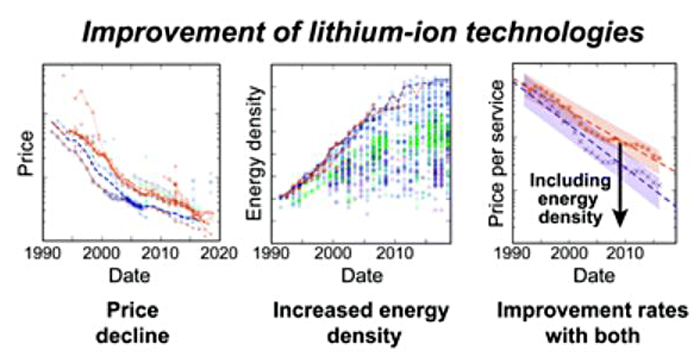
If you're from California or New York, I'm sure $40K starting for this or a Model Y seems complexly within your means, but there's a large chunk of the US (by population AND land) where <$20K new sedans remain popular and "nicer" vehicles are still in the $20-$30K range (and we're talking about SUVs and other family sized vehicles rather than small sedans).
People love to spam $40K US "average" while entirely ignoring that the average is a highly abusive figure containing $80K+ trucks and luxury vehicles, as well as a few $15-32K vehicles dragging that figure down. It doesn't really reflect anything useful.
Go look at this map[0]. How many of "the most popular car by state" are $40K? Zero. But yet an electric is going to replace a $21K Honda Civic by 2025? Really?
And I'm not dumping on the manufacturers here: From what I understand batteries remain the lion's share of an electric vehicle's total production cost (I've heard as much as $16K/vehicle). So this isn't profiteering, this is the tech not yet being ready price-wise for the mass adoption everyone seems to believe will come soon. Worse still as electric vehicles become more popular the rare earth metals that seemingly remain popular within the batteries may increase in cost offsetting our future reductions.
To be clear: I want to own an electric vehicle. I'd trade my current Subaru Outback ($27K) in tomorrow if I could buy a comparable electric. But those start in the $40K range (and honestly the cheapest trim is just a hero model, they don't intend to sell many, and blackmail buyers with missing basic features accordingly).
[0] https://insurify.com/insights/most-popular-cars-by-state-202...