Unfortunately, we are unlikely ever to see any of Delecroix’s paintings as they were intended to be seen. Fading pigments and other factors make this true for every painting, but doubly true for Delecroix as he used a lot of new pigments that were very unstable.
There is the story of Degas standing weeping with sadness in front of The death of sardenopolis at the way its colors had faded over time.
It's a nice vibe history you've got going on here but unfortunately it has little to do with reality. I recommend starting with the disastrous reign of Alexios III who had drained Constantinople's treasury years before the Crusaders arrived to understand the bigger picture. Ransacking their own capital in the name of internal strife has been a Byzantine specialty since the Nika riots of 532.
"- Err, we have no money.
- Sigh. ok. Go and attack our rivals over there."
Strictly speaking, this is not what happened, and a gross oversimplification. The Byzantines were not exactly rivals of the Venetians.
The whole thing was quite bizarre in fact, Roger Crowley has a pretty good story of the events leading up to this in "City of Fortune: How Venice Won and Lost a Naval Empire" if I'm not mistaken.
There's no good guys in this situation. The Byzantine Empire spent 1000 years doing the same kind of shit to other people. The little people, of course, suffered tremendously for it.
They justified it by religion but they really wanted to rob and mug. And this happened many times across history and will continue to happen: people claiming they are fighting for an ideal but really just wanting to gain power and money.
Yes and no. Downplaying “honest” convictions and other motivations unrelated to greed is flawed. Plenty of people in history did what they did because they truly believed in it (of course there were usually several motivations)
For instance the first Crusade was organized as a military relief expedition by the Byzantine emperor and the pope to save the empire from Turkish invasion and liberate the recently conquered Anatolia. Jerusalem was mostly an aspirational and symbolic goal.
Most people who joined did it because of sense of duty and various degrees of religion fanaticism. There was little prospect of profit and while the expedition was enormously more successful than anyone could have anticipated the overwhelming majority of initial participants were dead by the time they reached Jerusalem. Even those that survived to the end didn’t necessarily profit that much.
They should just trap Julian Baumgartner inside for a month, with nothing but water, food, and conservation-grade varnish and reversible pigments, and the whole place would look like new!
You might not be aware, but Baumgartner has a generally negative reputation in the conservator community. From what I understand as a non-expert, he's overly aggressive with his swabbing/varnishing and he's taken power tools directly to an artwork numerous times. The former isn't obvious to me either.
1400 years of parts of humanity stuck in what is basically a religously decorated bootloop. What a disaster and we are supossed to celebrate these recovery>generational overproduction>war>recovery loops as cultural enrichment , which is kind of worse because its defacto refusing help, while the global trade handouts these regions subsisted on break away. Egypt almost went bankrupt again and nobody cares. 3 times the population of california but economically and scientifically as dead as can be. May the help they refused others in need and stuck in self destruct be upon those fools.


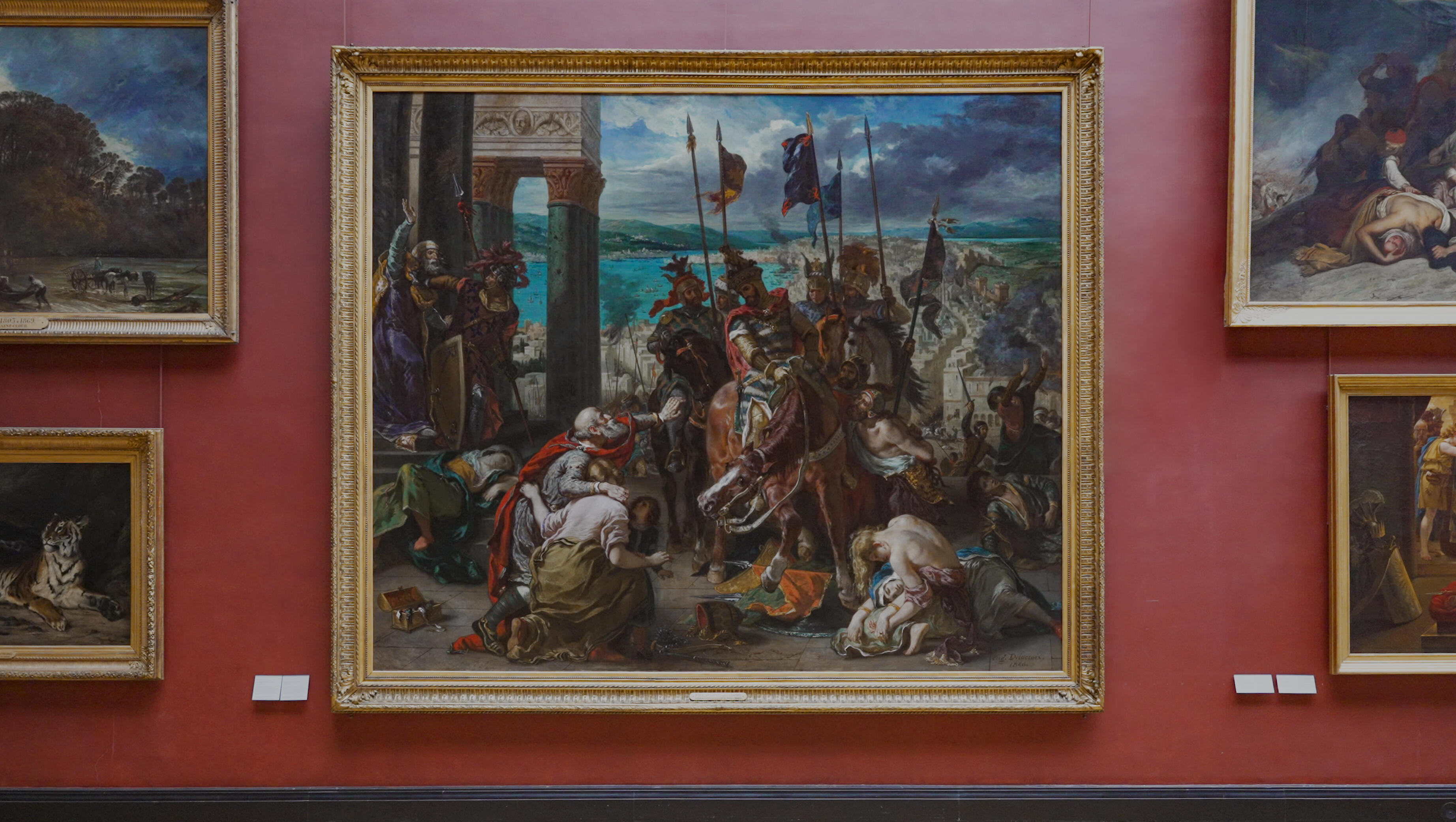

There is the story of Degas standing weeping with sadness in front of The death of sardenopolis at the way its colors had faded over time.
reply