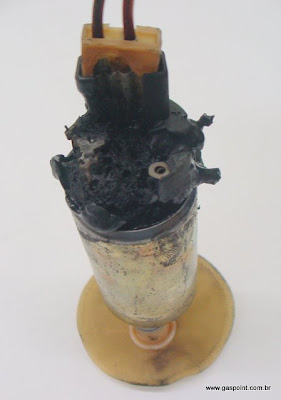
It's really no different than early fuel-injected cars being damaged by running out of gas. The solution? Don't run out of fucking gas. That didn't stop fuel injection from becoming the dominant technology, and neither will this halt the rise of EVs.
Non sequitur. While the circumstances surrounding the different engines and technology are wildly different, it doesn't change the root issue: if you neglect your car, it will break, and it will be a very expensive fix.
Sorry, but circumstances matter a lot in life, and you can't just brush them off because you don't like them. Try telling your insurance company that the circumstances don't matter. Or the hospital. Or the police. Or your boss. Or your customers.
He's not saying that the circumstances are completely irrelevant, he's saying that the specific circumstances don't matter (as long as they add up to neglect), because it takes different circumstances to cause different problems. That's not at all like trying to ignore who's at fault in a traffic collision.
There's a lot of variables at play here. The fact that the battery is so expensive vs. what a consumer has become accustomed to paying for vehicle maintenance on a traditional gasoline car. The tech is new. The way the vehicles operate is fundamentally different, and require different attention to different things. But it's all noise convoluting the argument.
The root: if you neglect your vehicle -- any vehicle -- you are in store for an expensive repair bill. It could be a $2,000 transmission. It could be a $10,000 engine replacement. Or it could be a $40,000 electric car battery. Because of all the aforementioned variables, the largest of which being the cost associated, there has been a massive amount of FUD surrounding bricking your Tesla. This response from the company is attempting to bring things back down to earth. If you plug in your car, you won't brick your car.
Which should really be common sense for anything at this point. Regardless of cost, if you take care of your possessions, they will last longer.
The circumstances do matter here. First, electric cars are novel which means the market is susceptible to FUD, and manufacturers like Tesla have to be sensitive to their customer's fears even if those fears are overblown. Secondly, I don't know of any conventionally powered car that can be permanently ruined simply by parking it in a garage for a month, unless that garage is on fire or underwater. For every other vehicle on the road, a reasonable person would say that leaving it parked in a garage is taking good care of it. It's up to Tesla to overcome the cognitive dissonance that comes from the idea that simply parking your car for a long time without plugging it in can actually destroy it.
It will not run out of gas. But it can - and will - get damaged if sitting unattended for too long.
It might be the tires (check your owner's manual!), it might be the AC (again, manual - it should be turned on from time to time), you might now notice a strange smoke due to new oil leaks inside the combustion chamber, it might make horrible noises for a couple of seconds (because the oil drained to the bottom of the engine), etc, etc.
Hell, last extended trip we went on, we had someone to start the engines (and the damn AC) for a few minutes at least every week. It is just good practice.
If indeed the battery management system on a Tesla is able to keep the batteries alive for months at 0% reported charge, then it is a non-issue. Noone is going to leave such a car unattended for months, really. Specially if it is a Roadster.
Yes, it is entirely different. Running an early fuel-injected vehicle out of gas didn't result in a repair bill that is approximately half the purchase cost of the car.
Secondly, you could leave your fuel injected car idle for months on and end without having to worry about the car slowly slurping the fuel down and then leaving you an empty.
So it is much easier to run a EV out of battery power and far more expensive to fix it when it does happen. No amount of PR spinning, FUD or wishful thinking changes that.
If you leave an IC car for a long period of time with 1/2 a tank of gas you can destroy the engine. Gas like everything else breaks down and if you left leave your car sitting for a long time you may need to completely drain the gas tank.
PS: Gas can noticeably degrade in as little as one month depending on ambient conditions. But, condensation is the largest risk for mid term storage. After 1 year you will probably have trouble starting the engine even after replacing the battery. And 3-7 years your probably looking at major repair work.
All very true; but I don't think very many IC engines have died just because the owner took a longer than expected trip and came back to the airport to find their vehicle's engine is destroyed. Furthermore, the costs of any such IC repair wouldn't be nearly as high as what it is in the Tesla.
The point is simply that Tesla should give more warning and attention to the very high cost of repair when you forget to plug the vehicle in or leave it unattended for long periods of time.
I've done this plenty of times. It's a common risk in cold climates when tractors, cars and lawnmowers are parked outside and one forgets to drain the tank. It gums up the carburetor. So you rebuild the carburetor, which takes 1 hr and $5 to do at home, or $100 at the dealer. Not $40,000. It also doesn't "destroy the engine". There is a high probability either don't know what you are talking about and made that claim up, or you are intentionally being misleading in order to promote a viewpoint using false claims.
First off most cars build after the 1980's don't have a carburetor and generally use fuel injection. Also, to much water in the tank can easily lead to a blown head gasket among other things.
Second most cars don't cost 40k, but if your talking about a say a bugatti veyron it's not that hard to do 40k of damage. If you want to compare it to the cost of the car then for an older car having a few thousand dollar repair bill can easily cost more than the car is worth.
I really don't see the problem. Tesla clearly states in the manual that completely depleting the battery and then leaving it without charging it will cause damage to the car. This would be completely analogous to running a brand-new early car without oil, destroying the engine. It's a serious neglect of your maintenance duties.
I mean, yes. You can "destroy" your car by not charging it. You can also destroy it by accidentally running it into a brick wall. No PR spin will change that either. That the repair would be very expensive is a moot point - this is a maintenance responsibility to you as the owner. As long as you are aware that this is an issue - just plug it in. It's not like you can forget by accident when you're aware that letting it completely deplete over a couple of months will cause an incredibly expensive repair job.
The problem is that this isn't common knowledge yet and it needs to be.
Is this Tesla's fault? Not entirely. But let's be honest, a small warning in the middle of the owners manual is not good enough.
I'm sure they feel it would be stupid to advertise something that to the general public looks like a defect with the technology. But I think it would have been better for them in the long-run if they were more informative. Now they are doing damage control, and a number of people have probably been turned off due to this whole saga.
tl;dr This information needs to be common knowledge amongst owners, Tesla could have avoided this if they handled it upfront instead of waiting for it to leak out on a blog.
>The problem is that this isn't common knowledge yet and it needs to be.
They definitely inform the owner that completely depleting the battery will damage it. Why does everyone seem to think they don't?
The newer Roadsters even come with a system to notify Tesla if the batteries are too low. What else could they do to educate the owners? Make them take a weekend class?
I don't know that there is a problem except when people compare it to running a car out of gas. One is a minor annoyance; the other a hugely costly repair. The fact that EVs also consume battery while idle makes the comparison even less useful.
You can destroy a Tesla by running it into a brick wall too. Yet there is no warning in the manual for that. Probably because it's not a risk unique to Teslas. Leaving your car at the airport for two weeks and coming back to find it suddenly worth $40K less than when you left it is more-so unique.
Tesla seems to be somewhat downplaying the high costs involved in forgetting to plug it in or leaving it too long.
Yeah, I think the comparison to running out of gas is extremely misleading and very prone to spreading FUD. The Tesla doesn't destroy itself when you're driving and it runs out of range, so I think we should stay far away from saying things that sound like that, because that's what many less tech savvy people will immediately think.
The problem is that obviously some people have not been aware of the issue. Tesla has (supposedly) only given very vague warnings in the instruction manual, without much emphasis and with no clear description of the consequences of reaching 0% charge. Except for a "You may risk damaging your battery".
It's not reasonable to assume that ordinary people know the inherent risks in lithium ion batteries. As such, the massive risk should have extreme emphasis in the instruction manuals, be explained in detail by the sales people, exist as clear warnings in the car, and so on.
Repair cost doesn't matter. It's up to the owner not to be an idiot, and to take care of the vehicle. The vast majority of owners of early fuel-injected cars knew not to let them run out of gas, and didn't. Similarly, when Tesla tells you not to let the battery go completely flat, you take care of your property and follow their instructions.
If I leave my house long enough, the roof will decay and I'll get massive water damage. Halfway-intelligent homeowners know they need to get their roof done once in a while. Bike owners know that if they leave their bike in the rain, it will rust.
Many of the trappings of modern day life require active measures to ensure they work properly, and this is no different.
I wonder, is running the batteries down when driving an electric car with a very limited range and general unavailability of high current outlets more, or less likely than running out of gas in a car with a very large range and widespread availability of refilling stations?
Many of the trappings of modern day life require active measures to ensure they work properly, and this is no different.
It's different because people are familiar with all the things you mention: roofs and rain, bikes and rust. People aren't familiar with electric automobiles. Once someone buys them, sure, they'll become familiar and the vast majority won't brick them. Tesla's problem isn't the owners, it's the people thinking about becoming owners. And those people (if they've heard the story) are now fearful of bricking their cars, where they're not at all afraid of bricking the Mercedes they were considering as an alternative to the Tesla. Now they're thinking, maybe I'll wait another few years on this electric car thing. That's Tesla's problem right now. Not bricked cars, but the fear of bricked cars. And that's why they should cover this under warranty.
I believe the problem (or at least one of them) with early fuel injection was that the injectors would overheat if they didn't have have the fuel passing through them to cool the solenoid. Newer cars won't even attempt to fire the injector if a high enough fuel pressure isn't sensed.
I commented above about this, it actually happened to my car. The pump overheated.
There were some natural gas kits sold that would not disable the fuel pump when you switched to gas. Some owners, when running out of gasoline, would switch to the gas. The fuel pump would keep running dry and melt. Something like this: http://2.bp.blogspot.com/_WafeVL7IZss/S5VP0fVNvuI/AAAAAAAAJP...
I would think its a little different since the infrastructure was already in place for gasoline. There isn't the same infrastructure nation-wide for electric vehicles.
I'd say it was significantly worse under gasoline. Then, if you ran out of gas, the car was bricked.
Tesla is saying that even if you drain your battery driving, it would still take 30 days of failing to charge it to brick it. While the infrastructure for just "filling up real quick" may not exist for electric cars, the infrastructure certainly exists at a person's home, otherwise, they wouldn't buy an electric car.
I think there would be a much more compelling case for this if electric cars were being mass-adopted, and the education for maintaining them was poor. Neither is the case here. Electric cars are still largely in the early adopters phase, and Tesla is telling people to not leave their car unplugged for months on end.
Running out of gas doesn't "brick" a car. You can either push or tow it to a gas station, or you can deliver more fuel to it, and it will continue working without missing a beat. Letting a Li-ion battery discharge completely damages the battery, which means you have to replace the entire battery, not just fill it back up. This is physics; Tesla can't change the laws of chemical reactions.
What about not keeping enough fresh oil? I believe keeping a minimum charge on an EV is analogous to the common knowledge of maintaining a gas-powered vehicle's oil. The problem is that people don't have experience with EVs.
I'm sure in the early days of gas-powered vehicles, plenty of engines seized up because people were unaware they had to change the oil and keep it at a certain level. And it certainly still happens on occasion.
Assumine new vehicles, doing nothing to a Tesla for ~30 days means $40k. Changing your oil 6 month later than the service schedule in most cases means inmeasurable (by owner) reduction in overall engine lifetime.
Sounds like you knew all along that the Tesla battery could be bricked by running out of charge? That would make you one of a very small minority.
The original story got play because it was a surprising, unknown, and frankly, sucks.
If all of my fuel-injected laptops had never been damaged when they ran out of fuel, I would be pretty shocked and disappointed when it was a problem with the Kugelfischer. Much like the Tesla owners this affected.
Tesla isn't a "cause" it's just a product. So whatever happens to Tesla one way or the other has a smaller influence on "the rise of EVs" than you can imagine. Mahalo.
I'm actually pretty surprised at how few people knew this about lithium batteries. I guess that goes to show how much protection is actually built into the devices, and how rarely it actually happens. This problem isn't fixable, but it happens very rarely and is easily avoided.
And even so, Tesla (and others like Nissan) has made available a warning system just in case, and all the blogger managed to do was to point out the privacy concerns with this solution.
So you agree, as we all do, that if you do what the "blogger starting an unfounded rumor" describes, then you will brick the car, as he claims will be the result. So you agree the blogger is telling the truth and the PR release from tesla is a lie, correct?
This is the second time[1] you have said precisely the same thing in response to a comment of mine in this thread. I don't care about whatever agenda you're trying to push; stop being so belligerent in your attempts to get me to say something completely orthogonal to my point.