(And let’s set aside the how they’d possibly be able to compete with the scale, market penetration, marketing spend, and mature app ecosystems of iOS/Android and Apple/Samsung.)
Privacy? Lack of advertising? Respect for the user’s choices? From the company that brought you Windows 11? Why does the world sorely need another closed-source operating system full of telemetry?
>Privacy? Lack of advertising? Respect for the user’s choices? From the company that brought you Windows 11? Why does the world sorely need another closed-source operating system full of telemetry?
Not the OP but I've had this thought as well. Microsoft has an almost unassailable position on desktop even still. If they had a solid position in mobile they could probably expel Android/iOS from enterprise with the same bundling tactics they use to push out different software on Windows with their own (often but not always) inferior offerings. From there the consumer space would be weaker and enterprise may start to ignore iOS/Android altogether. iOS and Android may well be to entrenched at this point for this to be a realistic fear, but based on how aggressively Google reacted to Windows phone (The youtube app fiasco) I think they at least worry about it a great deal.
Ideally, we'd have 3 or more fairly evenly matched and interoperable OS choices on mobile and desktop but that doesn't seem likely to happen. Trapping the monopoly inside it's own castle may be the best we can get.
I feel similarly about people calling for Apple to open iOS up to different browser engines. Idealistically that is what I believe should happen, but realistically I think it would just result in Chrome being even more dominate. For the same reason I lament the death of IE and even the original Edge. I don't personally use IE or Safari but I benefited from them existing and having decent market share.
> Would you rather have an expensive device that you barely control or a cheaper device that spies on you?
It is unclear to me if modern Windows actually still spies on you any less than Google at this point. My feeling is if still does, it isn't by much.
>> Microsoft has an almost unassailable position on desktop even still. If they had a solid position in mobile they could probably expel Android/iOS from enterprise with the same bundling tactics they use to push out different software on Windows with their own (often but not always) inferior offerings.
>> It is unclear to me if modern Windows actually still spies on you any less than Google at this point. My feeling is if still does, it isn't by much.
Microsoft is in a good position to be a strong third contender in the mobile space, but that does not mean that they would be better in all aspects.
>> Ideally, we'd have 3 or more fairly evenly matched and interoperable OS choices on mobile and desktop but that doesn't seem likely to happen. Trapping the monopoly inside it's own castle may be the best we can get.
Yes. That is why I would like to see more choices with hopefully better treatment of consumers and developers. Right now consumers have limited choices and the mobile development experience is agonizingly painful. It seems like an opportunity for disruption, but the entrenched players are dug in deep and probably nearly impossible to dislodge.
Personally, I would like to see more "convergence" devices that let the little computer I carry around with me be anything I want it to be: a programmable general purpose computer, a streaming media server, or whatever else I want.
There are some projects that offer such functionality, but most require expert knowledge to setup or are not very widely-adopted or not very mature:
Okay. So they are “out there to try”. Have the majority of users been clamoring for it?
> Personally, I would like to see more "convergence" devices that let the little computer I carry around with me be anything I want it to be: a programmable general purpose computer, a streaming media server, or whatever else I want.
And you are in the modernity and so much so that it wouldn’t be a profitable business. Do you think Microsoft is going to give you that?
> Walled gardens are not where innovation happens because the gardeners uproot whatever does not meet their vision.
Where are all of the “innovations” that the majority of people care about - or even enough to make a profitable business - on Android where you can sideload and have third party web browser engines?
>> You really don’t think you’re out of touch with what most users want?
I don't claim to speak for what most people want. I think having more options than iOS and Android could help promote more consumer-friendly choices.
>> Yes because using an operating system from the other 1 trillion dollar market cap company is going to be a better alternative. Meet the new boss...
It would be another choice. Yes, they have similar incentives, but more choices help to drive innovation and keep all players competitive.
>> And you are in the modernity and so much so that it wouldn’t be a profitable business. Do you think Microsoft is going to give you that?
No. Microsoft is a better position than many to be a third choice in smartphone platforms, but they have shown poor initiative in the mobile space. They could try again or it could be some other organization with sufficient know-how and daring. (Something disruptive like Tesla or Starlink perhaps?)
>> Have the majority of users been clamoring for it?
"If I had asked my customers what they wanted they would have said a faster horse." --Henry Ford
"Some people say give the customers what they want, but that's not my approach. Our job is to figure out what they're going to want before they do." --Steve Jobs
>> Where are all of the “innovations” that the majority of people care about - or even enough to make a profitable business - on Android where you can sideload and have third party web browser engines?
Android is innovative because it is more open than iOS. Even more innovation is possible given the right circumstances.
> I don't claim to speak for what most people want. I think having more options than iOS and Android could help promote more consumer-friendly choices.
Using Linux on the phone with the lack of integration, the poor interface etc is the opposite of “consumer friendly”.
Normal consumers are not asking for the ability to “program their phone and run media servers”.
> Android is innovative because it is more open than iOS. Even more innovation is possible given the right circumstances
>> Using Linux on the phone with the lack of integration, the poor interface etc is the opposite of “consumer friendly”.
Who said anything about using Linux on phones? I agree that a third smartphone platform would need to be user friendly. Whether based on Linux, OpenBSD, QNX, Symbian, or something is just a technical detail.
>> Normal consumers are not asking for the ability to “program their phone and run media servers”
No one asked for iPhone. They were quite happy with their Blackberry and Treo phones. My personal wants for a smartphone are not why having a third smartphone platform would help innovation and competition in the current stagnant duopoly.
>> “Open” is not an “innovation”.
Yes, but "Closed" sucks for everyone but the platform owners.
>> If you ask 99%+ of phone users. They don’t care about a “closed” phone platform anymore than console owners care.
No one cares until they are personally impacted.
>> And failing miserable. The market has spoken.
Markets shift with time and circumstances. Those on top will not be there forever.
>> And yet, it wasn’t “open standards” that brought any of the “innovations” to the market that users care about.
Most users are ignorant of the standards that they rely on. iOS and Android are built on POSIX standards and rely on numerous networking and telecommunication standards. The Internet and World Wide Web that people use their smartphones to access are built on standards. The "magical" experiences that Apple sells to users would not be possible without a veritable book of engineering standards:
>> How many decades have Linux advocates been promising the “year of the Linux desktop”?
I am not sure why you keep pulling Linux into the discussion. Just because Android uses Linux does not mean that other smartphone platforms would use it.
>I'd argue that Microsoft entering the mobile OS market is worse than having a duopoly
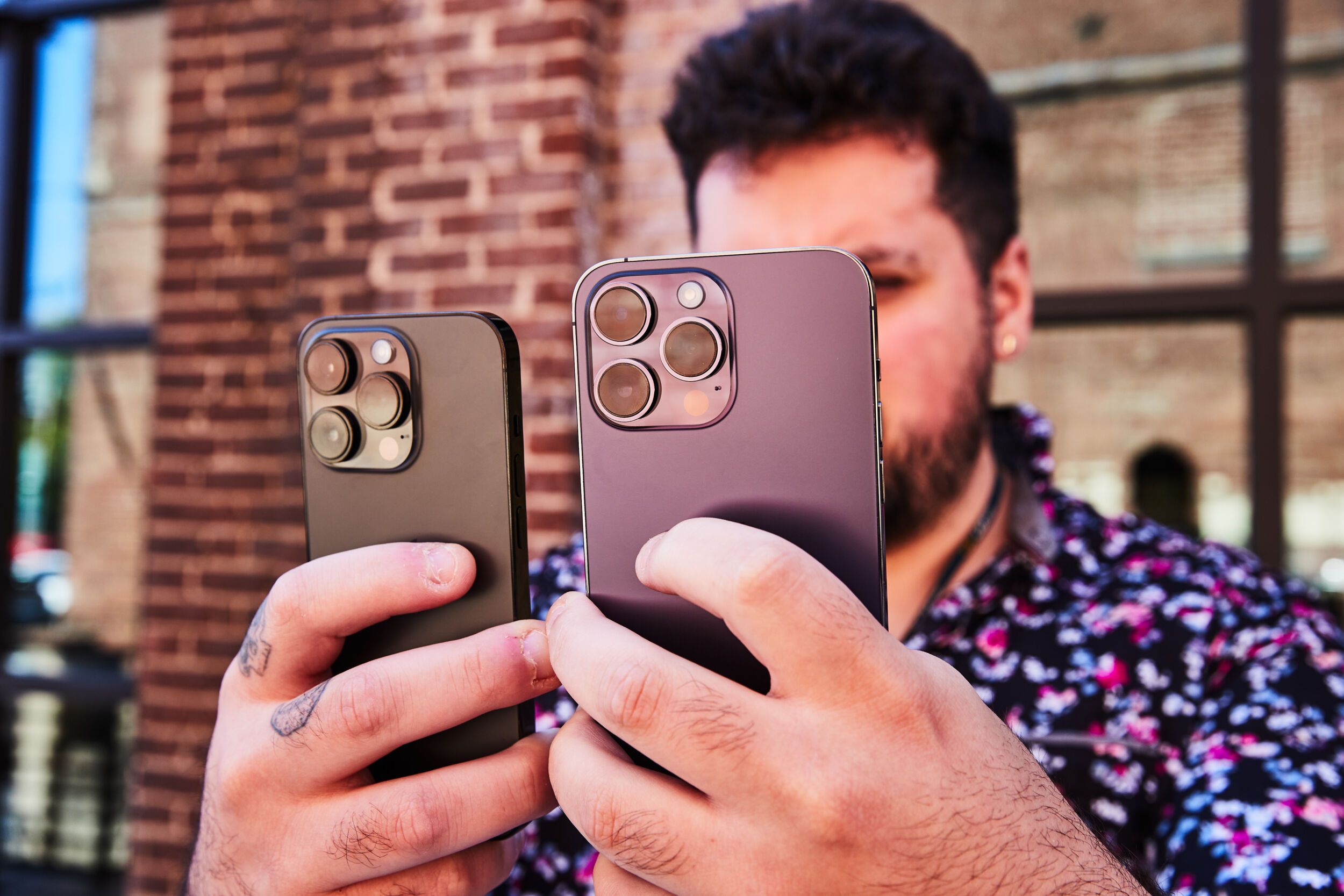
We need something. I’ve lost all faith in the hardware direction of iPhone. The 14 Pro (let alone Pro Max) is an absurd monstrosity. And Google clearly has no interest in innovation beyond copying Apple.
> And Google clearly has no interest in innovation beyond copying Apple.
I disagree, I think both platforms have copied plenty from one another. I used to jailbreak my iOS devices to get similar functionality to Android. Hasn't been necessary for awhile, I feel like the platforms are near parity now, but claiming one is copying the other (with no reciprocity) seems farfetched.
They've lost any sense of maintaining a cohesive design, or keeping things sleek and convenient. Performance has plateaued to a level of diminishing returns, so the only way they can get people to buy a new phone every year since iPhone 7 is to say "hey we put a bigger camera on it".
I have this recurring fantasy of an alternate history timeline where Steve Jobs never died, and when an engineer brought him the first iPhone 7 prototype, he held it in his hand, flipped it over, felt the camera bump, and said "You're fired. Get rid of the bump". I just refuse to believe he would have allowed this to happen, and I refuse to believe that we can't have good cameras without bumps.