Definetly a self serving piece as CB Insights seed themeselves as one of those long tail disrupters, but ironically they’re also struggling with the long tail. Their domain specific data on at least foodtech and agtech is poor at best and corp executives have told me they were burned by their subscription services which over promised and under delivered. BT May be expensive but it’s a religion for many in finance—-like google or a second internet. It’s not easy to replace.
I don't understand why transparent "content marketing" like this gets upvoted on hn. isn't the audience here savvy enough to recognize it for what it is? a company trying to exaggerate its value prop.
Generally, I'm in agreement with you guys on your views on CB Insights. But did you actually read this piece? This one happens to be well written: provides decent historical context and lays out the current landscape pretty well. I do think the author overhypes the disruption thesis. Bbg is still a fortress and it will take a decade or more to create viable alternatives to the terminal...
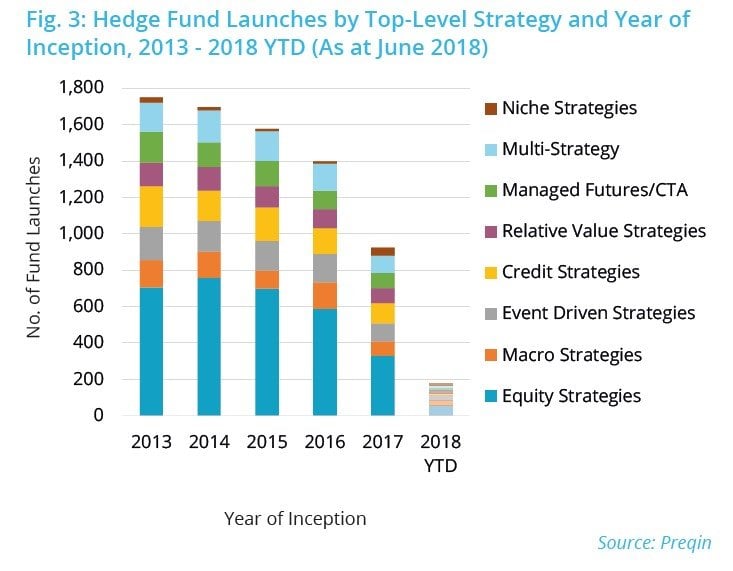
I think the reason for the decline is simple - the number of professional users is shrinking. Large banks have shrunk their trading desks and the number of independent shops is shrinking too [1]. Couple that with the increased weight of quantitative strategies, which need a market data provider rather than a terminal, and you can see why the Bloomberg Terminal is in decline.
UCF has a really nice one hour intro video tutorial[1] on using the Bloomberg Terminal. It really is crazy powerful, but has a high learning curve. It is however the defacto standard for professional traders and finance. I'd often thought would it be feasible to come out with a competing product that is iPad native and offered as SaaS ($99/mo per user) with no special hardware, annual contracts, and high costs.
I think that would have to overcome the hurdle of not looking “serious”.
Bloomberg terminals are multi-screen as standard, have a full window management environment, make very heavy use of the keyboard and shortcuts (I believe they are mouse optional, I’ve only ever seen them demoed with just a keyboard). These things are also only ever used on leased lines or very high speed wired connections to reduce latency.
The super fast trading is now mostly automated, so I suspect these productivity features are less important, and that a slick touch based UX could be better, but I think it would be tricky to convince people of that.
> ...and that a slick touch based UX could be better, but I think it would be tricky to convince people of that.
Why would a touch interface be better? The keyboard doesn't move or change state so you can type on it without looking (and your hands don't cover the display). You also don't move your hands so access to commands is extremely fast.
Touch is good when you have an infrequently used interface or when the set of data are highly unstructured (e.g. selection in a photo editor). Neither would apply to these cases.
defacto standard for professional traders and finance
What do professional traders do nowadays? My impression was it is already bots talking to bots and/or index funds outperforming/on par with actively managed funds.
True-ish in the small parts of the markets that are extremely liquid (top 500 global stocks, us treasury bond futures).
Very untrue for the vast amounts that aren't -- ten thousands of different corporate and government bonds, thousands of leveraged loans, more fancy securities like convertible bonds, credit default swaps or contingent-convertible bank bonds get traded over Bloomberg chatrooms (think Whatsapp groups with lots of additional features but lots of regulatory red tape).
In these markets passive funds underperform active funds by vastly more than the fee differential - and that is not coincidental.
This whole index funds outperform actively managed funds claim needs a lot more context. I always see adverts from people like Vanguard claiming such things but they are always just talking about raw returns they never take into account risk adjusted returns or the like. Not all returns are the same, you need to think about the risk taken to get those returns, a market neutral actively managed portfolio may return less than a passive fund but it's volatility will be much lower to.
bots only work on highly liquid contracts (which makes them more liquid). When you have much less liquid contracts you generally have people making the deals through chat (e.g. InstantBloomberg (IB)) or on the phone.<GO>1<GO>
2) Human traders will generally trade products that aren't automated or will trade products that are automated in sizes that aren't automated. They will also oversee the automated trading.
A quick Google shows Bloomberg terminals are $20,000 a year for more than two. So perhaps $1,188 a year ($99/mo) is to low, but maybe there are different plans that include premium data and features scaling up from the $99/mo plan? Just spit balling. Also, 1,000 customers which is not that many generates $99,000 a month in revenue, not bad.
Finally, at $99/mo you can market to "home-gamers" people who invest from home in a non-professional settings. Much larger pool of potential customers.
This is about pros realizing they don't need hammers anymore. To extend the construction analogy, it's as if the construction workers started building pre-fabricated components in factories and only snapped together the pieces on site.
According to the article sophisticated algorithms, rising use of quants and high frequency trading are leveraging data sources directly -- there's no need for a professional at a terminal anymore when you can essentially leverage IT to do the day-to-day trading.
I've seen similar statements about many pieces of professional software. The key point they forget to mention is that these small percentages are different for every user.
Yup, second that, this was pointed out by Joel Spolsky in the context of MS Office having so many options that are almost not used, so it should be easy to create competing product that would cover the most popular once. The crux of the matter is here that for each user the most popular feature set is different.
Bloomberg has also one more advantage: tones of historical data that are potentially difficult to find and aggregate.
> More than 320,000 people around the world — mainly traders, analysts, and brokers — pay about $24,000 a year each to use the Bloomberg Terminal to access real-time market data, communicate with other users, get the latest news, pull company data, and more.
> Assuming minimal discounting, that would make the terminal a more than $7B business alone.
The numbers do not fit 320,000 * 24,000 is over 700B.