- Proper camera handle and better DAC too, but not as mutually exclusive modules
What I want is:
- A robust and replaceable bumper that integrates with the design (i.e. isn't ugly). The phone should not be designed as if the user isn't going to slap an ugly case on it.
- A hole for a wrist strap so I don't worry I'm gonna drop my phone. All cameras have one, but now that phones are taking over, none have it.
- An unlocked bootloader that doesn't void your warranty. Or even better lets you set the signing key on first use (a sort of Trust On First Use that the user is the owner).
> An unlocked bootloader that doesn't void your warranty.
I, like probably most of you, flash a new image to the phone when the stock software starts showing its warts. I agree with this idea but I do understand where phone manufacturers are coming from. You can obviously avoid the problem of software-bricked phones by having the factory image as a secondary ROM that can be hardware flashed with a button sequence.
The real problem is, I recall a bad Android kernel floating around for the TyTN II (a long time ago) that would toast the CPU after extended use. That's permanent damage that would be covered by warranty and would cost LG money. Maybe what they could do is only lock down the kernel. Who knows, it's a difficult problem to solve.
To add one feature:
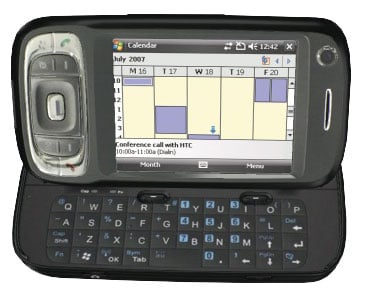
- A slide-out tactile keyboard[1].
The TyTN II is the greatest smartphone that I have ever owned for this reason. Touch keyboards just don't cut it. The answer isn't to have predictive text (i.e. SwiftKey) but instead to not botch up the text in the first-place.
I think it's worth looking at desktops for flashability. You can install any OS on most desktops and there aren't that many issues about it. In my opinion, hardware shouldn't break because of bad software. That would mean that an exploit could not only brick a phone's software, but break the hardware beyond repair. What you mention sounds like bad thermal throttling, it's the CPU's job, not the OS's.
My idea of a fair compromise between manufacturers and customers is:
- Let the customer run any OS will full hardware warranty. If a problem looks like it's caused by software, require the customer to flash back to official software, and provide warranty if the problem persists.
- Bolt down the hardware to restrict use out of specs (no overclocking, no software defined radio, ...)
- Provide an engineering pin. When removed, the phone is out of warranty and you can flash any firmware (you can have OC, SDN, custom SSD firmware, ...)
Google really could show a whole more love for tinkerers. A better OS isn't getting made because it's so difficult to flash on your own device, let alone flash it on thousands of user devices.
Regarding your point about keyboards, I personnaly don't like typing without all my fingers, so what you propose wouldn't suit me. But do you think an addon that bolts to the back would be okay for you?
> Bolt down the hardware to restrict use out of specs
That's what I was thinking, require their signature to change bits that could harm the phone. You could even market this feature: most phones only have change-able back-plates. I'd bet that people would jump at the chance were they to see how drastically Cyanogen or MIUI changes their phone - don't just give people the chance to install any ROM, but actually provide a few of the more popular ones ready to go.
> But do you think an addon that bolts to the back would be okay for you?
With the module system of the G5 this seems completely plausible. When you frame it that way you can really see how LG [are trying to] shine in the blandness that is the current cellphone market.
Those are excellent points. Old small flip phones sometimes had a small place for a strap loop so you can fish it out of a bag by the strap, and of course also to hold on to it. Phone straps are popular in Japan, and I've seen some that connect to the headphone jack, but it doesn't really work well, so the sturdier ones connect to a bumper.
A bumper-design (maybe a groove to hold a bumper) is a good idea too. One can argue that making phones easier to damage encourages people to replace it with new ones so manufacturers have hidden incentive to avoid such safety features, but ultimately if someone comes up with a better design like you state, people will flock to it.
All agreed. I'd add that the market is slowing down, so bumpers could end up bringing more profits. First, customers would be more willing to invest in higher margin products if the device was more robust and likely to last. And manufacturers could sell official bumpers with advanced shock-proofing, a nice metal finish, perfect fit to the case, many different colors, ...
Good point about market maturity. If people are holding on to phones longer, sell them more accessories that people replace periodically, and make the base unit more also high margin (if they accomodate the official bumpers). But it's the consumer's choice -- they don't need to buy new bumpers if they are content with what they have. It's a variant of the razor & blades model.


- Proper camera handle and better DAC too, but not as mutually exclusive modules
What I want is:
- A robust and replaceable bumper that integrates with the design (i.e. isn't ugly). The phone should not be designed as if the user isn't going to slap an ugly case on it.
- A hole for a wrist strap so I don't worry I'm gonna drop my phone. All cameras have one, but now that phones are taking over, none have it.
- An unlocked bootloader that doesn't void your warranty. Or even better lets you set the signing key on first use (a sort of Trust On First Use that the user is the owner).